Second Quote
Last Friday I had a meeting with the director of another company who provide publishing services to those wishing to publish their own books. The cost will be about the same as the first quote I received, but there are differences in the services they provide. If I went with the first company I would have to provide my own cover design, whereas if I chose the second, the cover will be designed for me. I think that is quite important as the cover has to look good for both the paperback book and the thumbnail size used by Amazon for sales purposes.

An on-demand book printer at the Internet Archive headquarters in San Francisco, California. Two large printers print the pages (left) and the cover (right) and feed them into the rest of the machine for collating and binding. Depending on the number of pages in a given book, it might take from 5 to 20 minutes to print. (Photo credit: Wikipedia)
The cost with the first company would give me five hundred copies of my novel whilst the second company prefers a print on demand, so only a few copies. Both methods of printing have their advantages and disadvantages, which it seems to me probably balance each other out.
The big difference is in the approach to marketing the book. Whilst both provide marketing services, the second company provide a much longer and more intensive service and, I think a more personalised one than the other.
I think I’ve decided that the marketing is so important that if I want my book to have the best chance of success, I would be better with the second company, but I’ll wait for the paperwork before I make a final decision. After all, the lawyer in me says, the devil is in the detail.
And just so that I get an idea how the self publishing platform works on Kindle I have decided to publish a slim, in fact very slim volume of poems I wrote while I was doing my MA in Creative Writing. I’m really doing it for myself to try and learn if Kindle and CreateSpace is a good way to publish, rather than to attract any sales. But you never know!!
First Quote

White horse in field (Photo credit: Wikipedia)
I have just received a quote from the publishing company for copy editing, preparing for printing as a paperback, proof reading, cover design, formatting as an e-book, distribution and marketing. The total cost is about £4000.
I would have five hundred copies of the paperback, which is the minimum number for having access to the distribution network the publishers use. I know there are cheaper ways of getting the book published-this is the de-luxe version, but they do a lot of the work and hopefully prevent the mistakes that mainstream publishers point to when they criticise self publishing. The question for me is how much faith do I have in my book to spend so much money on launching it? Still not sure, but it’s still cheaper than the mythical horse- the one I don’t have, can’t ride, don’t pay livery charges for etc. Anyway I’m off to see another company who offer the same sort of service at the end of the week.
Distractions
My non-writing life has taken me away from my computer for the last two weeks. Certainly I have been unable to make any sensible contribution to this blog. I have however managed to send out my manuscript to a ‘Self Publishing’ Company for a quote to prepare a cover design, format the novel for e-readers and for printing, and made an appointment with another company to discuss an advertising  campaign. I think I’m trying publish my novel the easy way, rather than handling all aspects of self publishing myself. I tell myself it’s cheaper than keeping a horse, which seems to be the preferred hobby of most of my neighbours. Do I detect a horrible pun there?
Amazon make it seem so easy, your book published in hours but that rather unsettles me. Am I being a wimp about it or not? I’m not sure.
Readers

Caricature of Mr Charles Frederick Gill (1851-1923), Barrister and Recorder of Chichester. Caption read “Gill Brass”. (Photo credit: Wikipedia)
I have been thinking about who might want to read my book Crucial Evidence. I have always assumed it would appeal to a large number of readers, mainly because whenever I was asked what I did for a living and I said I was a barrister, I was always asked about my profession and how the criminal justice system worked. Sometimes I got so fed up with being questioned about my life at the Bar, I would lie and say I was the station announcer at Waterloo, and reel of a list of stations from lines I travelled frequently. However as my writing progressed I thought that perhaps some men would be put off by the rather feminist stance the book takes. Two women, a barrister and a police-officer, are the main protagonists and their ability to work in male dominated professions is one of the themes in the novel. Because of that I adjusted my views to thinking that perhaps men would not be keen to read it.
Then when I was about half way through the writing process the series Silk was broadcast and achieved viewing figures of two million. My novel has similarities with the TV programme, so I thought it would appeal to anyone who watched that show. The story line is about the trial for murder of a rather inadequate young man, rather than the investigation of the murder, although there are elements of the investigatory process. That may raise questions as to whether the enthusiastic crime novel reader will like the more ambiguous approach taken by the lawyers. I do hope so, but what do others think.
The London Book Fair
I have spent the last two days in The Authors Room at the London Book Fair listening to presentations from the various companies who offer services to authors who wish to self-publish. These included Matador who provide a

Author room (Photo credit: Rrrrred)
complete suite of services, the various e-book platforms Kobo and Kindle. Also a number of authors who have done both traditional publishing and also self-publishing. They provided a lot to think about, with the various options available. They emphasised the importance of marketing, including the design of the cover. It has to be something that looks good the size of a postage book, as well as on the book, because that’s what appears on Amazon. Get it done by a professional if possible. Similarly if you can get a professional edit, certainly a copy edit/proof read (although I’m not sure what the difference is, except that one happen before the book is in galley form and the other after). I’ll come back to this when I’ve had more time to think about it, but it did confirm for me my decision to take the self publishing route. Thank you to Authoright for organising this event.
The Dysfunctional Hero
Laid low with flue over the past two weeks, has given me the opportunity to do more reading than normal and I have completed a trilogy of

Cover of Black and Blue
novels by Ian Rankin. They were Let it Bleed, Black and Blue, and The Hanging Garden and are collectively described as ‘The Lost Years.’ In Black and Blue Rebus goes on the wagon, and it made be wonder why it is that so many ‘heros’ are dysfunctional being either alcoholics, or drug users or mentally unstable. In real life, our experience is that with any of those problems, the individual’s ability to process information, to act rationally are impaired. We only have to think of the effect on driving abilities after drinking alcohol to understand that. Yet these fictional characters seem highly competent. Why do we, as readers’, accept behaviour in fiction that we would deplore in our friends and family? Has anyone any thoughts on this?
A Long Way North
It’s not yet spring, still it’s cold and grey.
I spent a lazy Sunday afternoon 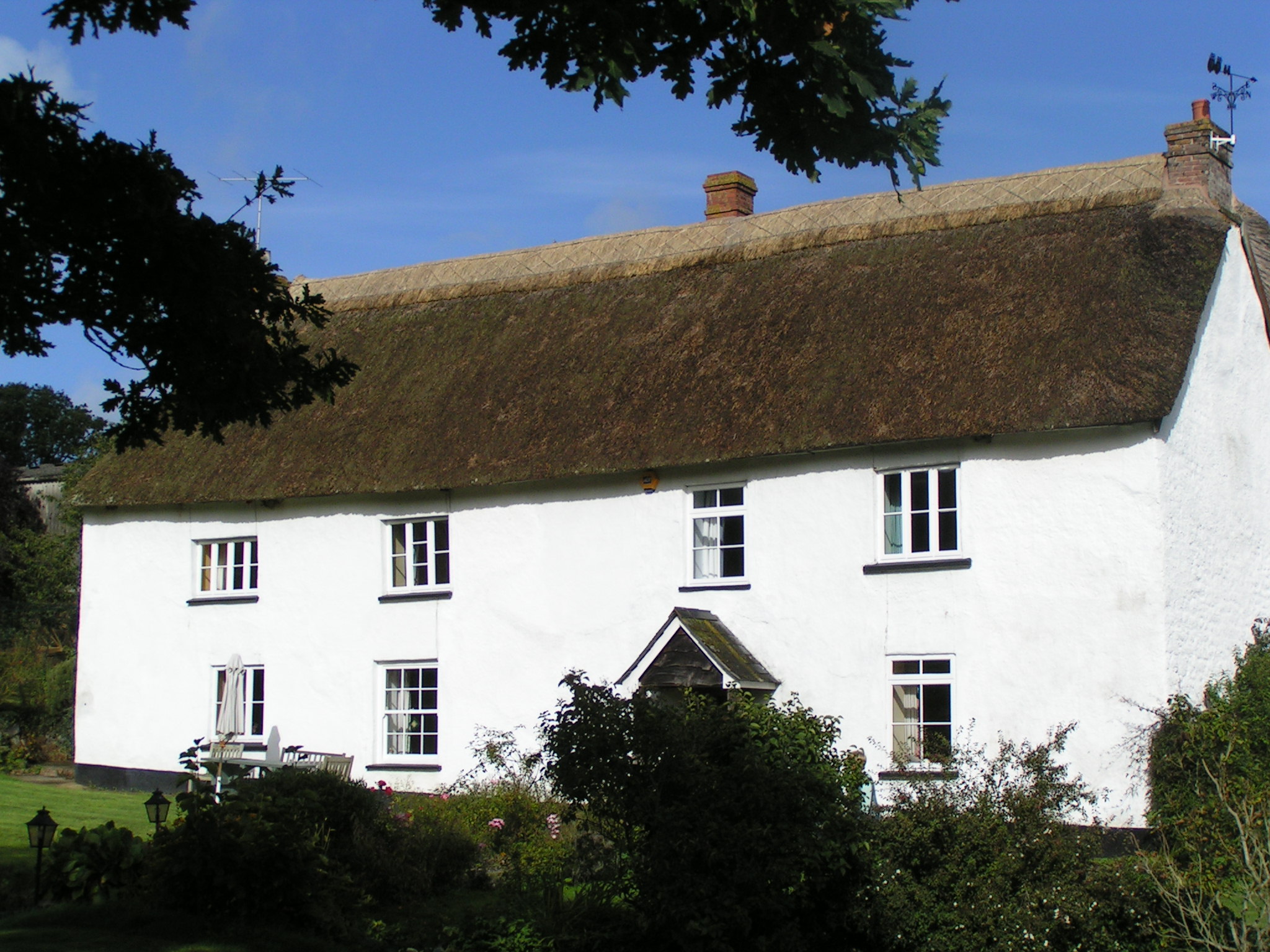
Before a warming fire on a granite hearth
In a long white house, far from
The place you called home.
I left you behind, a long way north,
But once I saw you here
Long after you were gone
In sloppy cardigan, slippers, book in hand.
You turned and smiled at me,
That smile, that well-remembered smile.
Do you like this place?
And me? Do you like what I’ve become?
The child you taught to read and play,
Who grew, and learnt and moved away
From that sheltering home a long way north.
National Institutions
Recently I went to see the new Alan Bennett at the National Theatre. ‘People’ is about two sisters who are in dispute about what should happen to the family home, a run down mansion in which one of them lives. The other sister wants to donate the property to the National Trust. I won’t spoil the story, but as one national institution pokes fun at another it takes some beating. I have been trying to think of how

Alan Bennett’s The History Boys, at Broadhurst Theatre, Manhattan (Photo credit: chrisjohnbeckett)
the National Trust might get back at Alan Bennett and I had the idea that they might take over his house and run it as an attraction for their members. Talking Heads in the attic, picnic from Wind in the Willows in the kitchen, The History Boys in the study, King George III in the bedroom and of course The Lady in the Van in the garden. Wouldn’t that be fun? Any other ideas for the location of characters from Alan Bennett’s plays or books?
Publish and be Damned
I recently heard from the major publisher who have been considering my novel Crucial Evidence that they are not going to publish it because they don’t think it will be a bestseller! Just a reasonable seller would be good enough for me. So it looks like its self publishing.
In furtherance of that route I had already send the book for a full edit and I have also received the editor’s comments on it. Her view is that in places the book lacks pace, and she suggests that I remove quite large sections which give my main character, a barrister called Cassie Hardman, a context. One aspect is her background, which I feel is quite important as she comes from a ‘working class’ family (hate these

An Oxbridge college seen from the outside (Photo credit: Wikipedia)
descriptions but in the UK they still apply), state schools, red-brick university, whilst the Bar tends to be ‘upper middle class,’ private school and Oxbridge. She feels an outsider in her chosen profession and that is reflected in some of her decisions and attitudes. The other is a sub-plot about her Chambers’ politics, which again shows her reactions away from the courtroom, but still with her colleagues. Without those changes she thinks it is unlikely I will find an agent.
The publishing business uses agents as gatekeepers to monitor the manuscripts they receive and ensure only the best get through to the publishers for their consideration. When it comes to genre fiction, the formats are so fixed that anyone writing something that doesn’t fit precisely within the stereotype is not considered.
Another way of putting it is that for commercial fiction the author must write what the publisher wants, or rather what an agent thinks the publisher wants, and not what the writer wants to write.
So to amend that well known saying Self-publish and be damned.
Cookery Writers
The recent death of one of my favourite cookery writers, Katie Stewart, has reminded me of the debt I owe her for my own skills in the preparation of meals.

Recipes (Photo credit: pirate johnny)
I first became acquainted with her recipes in The Times when I became a Law Student in the 1960s. The Times was compulsory reading for lawyers then as the Times Law Reports could be quoted in Court. I began to read Katie Stewart’s cookery column and when I moved into a flat and cook for myself, I used the recipes she wrote. I soon acquired a reputation as a good cook and an invitation to have dinner with me was highly prized, particularly with the men of my acquaintance. I would turn my desk into a table with a tablecloth, candles and nice white napkins. I would follow the recipes meticulously and always produce a good meal for my friends.
I still have the Times Cookery Book as well as her other books and they are the bedrock of my repertoire. I love the recipes for poached fruit, Lamb Cutlets Shrewsbury and lots more.
Recently I have become a fan of Sophie Grigson, who has inherited her mother’s flair for easy to prepare dishes, using fresh fruit and vegetables. Diane Henry too writes straightforward recipes for busy cooks. Her baked apples with marmalade and almonds are superb.
Anyone else like Katie Stewart or what other cookery writers do you swear by.

 scribblingadvocate