Typical English Summer
I wrote this poem two summers ago, but it seems to be so appropriate now as we approach the longest day of the year.
Wet summer
The sun was shy this summer,
Hiding behind darkened clouds
As if ashamed.
Clouds changed from polished pearl
To dark purple bruises,
And it rained.
The earth soaked up the water
Until it could take no more,
And overflowed.
Pools of peat brown water,
Bright green sponges of moss,
Watery footprints.
Everything dripping wet.
Winchester Writing Conference
 As part of my campaign to find either an agent or a publisher for my book, Crucial Evidence, I am attending the Conference run by the University of Winchester. In addition to workshops on ‘How to write a Page Turner,’ and ‘How to get to Know your Characters’ there is the opportunity to have a ‘One to One’ with a selection of literary agents, editors and authors. I had to choose up to six individuals of whom four could be agents or editors and two authors. I found making a selection from about fifty people difficult. Of course ruling out some-one who has no interest in my genre was the easy bit, it’s not much good sending a crime novel to a poet or an agent who only wants children’s books, but that still left a considerable list from which to choose. Having made my choices I had to put together copies of a letter introducing myself and my novel, a synopsis and a section of the book. No two of the authors, agents or editors want the same thing. The number of pages of the book varies from two chapters, first ten pages, first 3000 words, first three chapters, first 500 words and first chapter. Making sure the right number of pages went with the right letter took me a whole day. Obviously one hopes that one of the agents or editors will love the book, and want to read the complete novel. I went to the same conference about three years ago and saw one agent who loved the sections I had sent her, but by the time I had finished writing the book, she was on maternity leave and her replacement was not so keen. They were very complimentary about my writing, but didn’t want to take it on. I hope I am more sucessful this time. Has anyone got some good advice on getting an agent or is there a problem with an industry in paralysis.
Perhaps the answer is self publishing.
Swifts- Apus apus
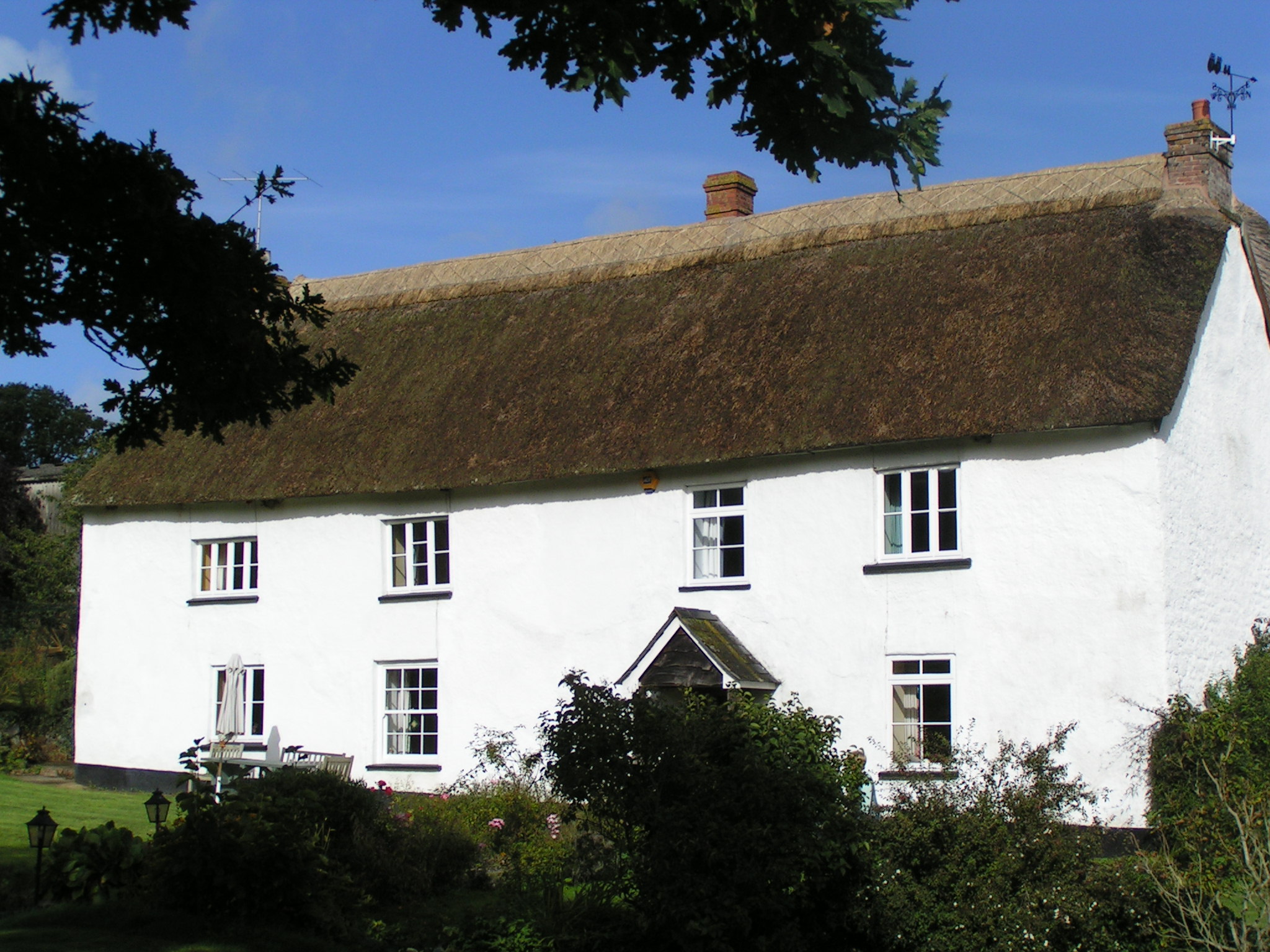 Each year in May we watch for the return of the swifts who nested here under our thatch, hoping they have survived the long journey to and from Africa. They have now arrived and it seems the three pairs who left last year have returned or their offspring have. I wrote this poem about them coming back here.
Swifts‘ Return
On early summer evenings we wait
For the swifts, impatiently.
Arriving dramatically
They circle the house
Remembering the way under the eaves.
Each evening they fly
Screaming, winged speed hurtling
Straight towards the thatch
Thump against the board and vanish
The noise reverberating through empty rooms.
We shelter them until late August
Until they imprint this place
Hardwired on their homing systems
And fly south, their nests empty.
Only the creaks and groans of the house
In the wind, recalls the summer months.
The Unexpected 2
Having described what happened when Alan and I were attacked in our garden, I have tried to examine how I felt at the time and why I acted as I did. The image that comes back to me now is the moment when I realised one of the two men walking into our garden had a knife. I can see his face, dark-skinned but not black, round head, close-cropped hair and stubble round his chin and cheeks, the arm in dark clothing pointing forward at waist level and the glint from a dark metal blade. Then I can remember nothing until I felt the blade on the left hand side of my neck and realised the man was behind me. The overwhelming feeling was that I must escape to get help. I stood up and ran, screaming for help. As I banged on our neighbours’ doors, I was afraid of what was happening to Alan. I had visions of the two men standing over him while blood dropped to the ground. I began to panick when no one answered my cries.
Next one of the men ran out of our front door and along the small street, carrying my handbag. I continued to run in the same direction still seeking help, but as I did so , I became aware the robber was running towards a car parked round the corner of a a garden. I followed him, determined to get the number of the car, wanting something that would help to identify our assailants. I continued to repeat the number out loud, as I ran back towards our garden, Then a sense of relief finding Alan on his feet by our front door. He wrote the number in our visitors book. Our neighbours by now were all outside and the incident was over.
Those few seconds seemed like a life time, cancelling my credit cards and barring my mobile phone took more time. Putting my identity back together, obtaining new cards, new driving licence and getting a new phone working properly has taken the last two weeks. No doubt it will take longer before the assault becomes a distant memory. I don’t think I will ever forget it. It’s ironic really as I spent a lot of my working life representing similar young men, but then again I’ve witnessed so many violent kids snivelling in the corner of a cell, because they are about to go to prison and that gives me the strength to fight back at them. I know they are bullies who crumble as soon as someone stands up to them, but it is a risk and one better taken when there is an escape route for both you and them. Luckily we were uninjured.
On a positive note it gave me an insight into how the victim of a crime might feel and the range of emotions they might have, so I can use that in my writing.
The Unexpected
The last two weeks have been so fraught that I have been unable to think straight never-mind being able to write on my blog. The ten days spent in our little bit of France, a maison du village close to the super-cute town of Uzes in southern France ended on a sour note. The market in Uzes is an amazing experience- this is how people shopped before department stores. Stalls selling everything, clothes, shoes,table clothes, cooking utensils and of course food. At this time of year the cherries are in season. They are a speciality of the region, dark red burlat cherries, not too sweet but not too sour. We bought a large punnet of them along with other fruit and vegetables.
After we got home, we made coffee and went to sit in our small garden, which is across a narrow lane. As I drank my coffee, I struggled to read Le Figaro, while my husband read the Times on his Kindle. A few minutes later, two men walked into the garden. At first I thought they were kids acting the fool, and I said to them, in my best French, that the garden was private. The two men kept on coming towards us, and I then realised the one leading had a knife pointing at me. Before I could move, he was stood next to me with the knife at my throat. Without thinking, I pushed my chair back. This must have suprised the man because he let go and I was free to run from the garden screaming ‘Help, Help’ (my French had totally escaped), into the square, and then along the narrow street to the door of one neighbour, where I banged on the gate and rang the bell, and then to another where I knocked frantically on the window, making the dog bark, but no one came out. At some stage whilst I was doing this, I saw one of the men come out of our house carrying my handbag. He must have gone onto the kitchen door and run through the house to the front door, where he emerged into the same street. I continued to run towards the gite at the end of the street where I knew about six young men were staying, with visions of my husband being attacked by two men, when I realised the man with my handbag was running towards a blue Renault parked around the corner. I followed him and saw the registratioin number of the car, which I kept on repeating aloud (it was CC 108 LT, if you want to know) To my relief as I turned back into our street I saw my husband on his feet, I was afraid I would find him in a pool of blood, and on a neighbours telphone to the police. More of the locals arrived on the scene as we tried to deal with the police and make calls to cancel credit cards and have my mobile barred.
I have had my handbag snatched before, but being in real danger of harm was a very unnerving experience and I am still very shaken. Sometimes life is not a bowl of cherries.
Taking a Break
 Sometimes one needs to getaway from it all and we have the perfect bolthole. A small house on the edge of a village, but close to the magical town of Uzes. Sitting in the Place aux Herbes on a sunny afternoon, and it usually is sunny, with a glass of wine and indulging in some serious people watching is my idea of heaven. And it’s a great place to indulge the imagination with all the stories one can invent for the strangers you see. So no blogs for a couples of weeks as I will be without the internet, using pen and paper, being as unobtrusive as possible and just observing.
Did I always want to write?
My first reaction to that question would be no, I didn’t harbour an ambition to write, but on reflection I did write stories when I was a teenager. Those really awful romances, girl meets boy, but they are torn apart by whatever came to mind, illness, parents moving etc. We’ve all been there. I used to make up stories with a friend as well. As we hung around the local park, we would invent new characters for whatever soap was popular, weave their stories into the narrative, and act out our parts.
Then I went to university and studied law, lots of reading and writing there, essays and law reports. That continued when I began work and had to take professional exams to qualify as a solicitor. Once I got past that stage, I wrote very detailed legal letters to clients and short speeches for the Magistrates Court. After a few years as a solicitor I wanted to be a barrister, because I longed to do bigger cases and to be able to appear in the Crown Courts and address juries. The transfer from one branch of the legal profession to the other wasn’t difficult, but for the first year or so, I didn’t have too much work to do and my afternoons were usually free. I found a number of ways to pass the time, exercise classes at The Pineapple Dance Centre in Covent Garden, visiting museums and galleries, going to matinees at the theatre and I began to write again. This time I tried to write legal thrillers, but they were anything but thrilling, so I gave up. As I became more senior and the cases I had were more complex, I was writing speeches to make to the jury. Each one a small story based on the facts that has been established during the trial. Of course advocates try to influence what the witnesses say in court, and part of the art is to put the most favourable interpretation on the evidence. So story telling again.
After I retired from the Bar, I wanted to write a family story because my two nieces were brought up in the USA and know very little about their English heritage – my brother is a non-communicator, whereas I know quite a lot about my family, some of it mythical, but then doesn’t every family have its legends. My attempt was just not interesting; I knew my nieces wouldn’t read it, so I realised I needed to get out of lawyer mode and learn to be more emotional – I find that difficult to say as I don’t think I lack feelings, it just being objective is so important for lawyers, but doesn’t make for interesting reading. Dry is the usual description of lawyers, it goes with the job.
That lead me to reading for an MA in Creative Writing at Exeter University. Now I don’t get bored with my writing – I write really good round robins at Christmas. I have written a novel, a courtroom drama/thriller and I hope to get it published, one way or another. Perhaps deep down I did always want to write.
Writing Character
 Creating a character is the most important element of writing. When I did my MA at Exeter, I was told that any character is like an iceberg, the writer only uses a small percentage of the information she has for the story, the rest provides the motivation for the way the character behaves.
The protagonist in my novel, Crucial Evidence, is a female barrister born in 1974, in Lancaster in the north of England and her parents still live there. Her father, Bernard, is and electrician and her mother, Elaine, makes cakes for weddings, birthdays and other special events. She has a younger sister Amanda, known as Sandy, who is married and has two sons.
I have a picture of Cassie helping her mother, stood on a stool in a warm kitchen, a spotted apron tied round her, mixing fruit into a cake batter, and then licking her fingers as she hands over the mixing bowl to her mother.
Another major influence in her life was her grandfather, Frank. Lancaster was the home of the furniture manufacturers, Waring & Gillow, whose products are now highly sought after because of the quality of the workmanship. The factory closed in 1961 and Frank was made d at the age of 50, after that he had to find work as and when he could.His wife, Alice, died before Cassie was born, so she only knew about her from her father. Frank never remarried and centred his life around his family. When Cassie won a scholarship to Lancaster Grammar School for Girls he made a desk for her and it is one of her most treasured possessions.He died when she was about 14, but not before he had instilled in her a strong work ethic and a sense of fair play.
Her mother thought Cassie would go to Catering College and use the skills she had acquired in their home, but the headmistress of the Grammar School encouraged Cassie to go to University. Cassie was undecided what she should study at University, until she went to the Crown Court when it was sitting in Lancaster Castle. She enjoyed the drama of the courtroom and the pursuit of justice by the barristers representing the prosecution and defence, and decided she would study law.
She went to University in Nottingham, where she met and married a Ph.D. student Tony Cranston. After getting a 2.1 degree in law she became a student at Grays Inn and attended the Inns of Court Bar School. This meant she had to spend the week in London and go home at weekends.. As the final exams approached she found herself working longer and longer hours, and Tony started going out on his own. One evening, she telephoned him on his mobile and she could hear a woman’s voice in the background giggling. She asked him where he was and he said in the library, pretending he was working on his thesis. At the weekend she picked up his mobile phone and scrolled through his text messages. her suspicions were confirmed when many of the messages are from the same woman, saying how much she enjoyed their evening together and thanking him for sending her flowers. Casssie had begun to have doubts about her marriage and was uncertain she could forgive his infidelity. To test Tony, she told him she was contemplating searching for pupillage in London. He told her it was up to her, but of course he couldn’t leave Nottingham.
She took advantage of the sponsors programme at Grays Inn, attending dinners with another Lancastrian in whom she confided. The older barrister arranged for her to have pupillage with her (a form of apprenticeship). Living and working in London she saw less and less of Tony and they drifted apart.
Getting a permanent place in a set of barristers’ chambers is difficult and Cassie along with many other young barristers found it hard. On one occasion a judge’s son get the place she hoped she would get and she was angry that who you know was as important as what you know. Her own working class background and the hint of a Lancashire accent in her voice she believes went against her. Eventually she does get a place in 3 Burke Court and her career began in earnest.
Well that’s the background. By the time of the novel she has been in practice at the Bar for 12 years and is a hardworking, natural advocate. She puts her career first, although her family is very important to her. Her divorce was made absolute in 2002, but there have been no permanent relationships up until now. Her career has been successful and she has bought a flat in Notting Hill, likes nice clothes, even though she has to wear black suits for work, and good food. She still cooks as it is the only hobby she as time for, she has to eat so she might as well prepare herself a good meal and enjoy a glass of wine with it.
Rejection Slips
I have received two rejections in the last two days. One liked the idea of the legal background and thought my personal knowledge shone through, but didn’t think the plot was ‘big enough’ and it was too realistic. Also my main character Cassie Hardman needed more ‘oomph’. The other said the novel, Crucial Evidence, was well crafted and well conceived but not for them.
Sometimes I feel I am nearly there and the next agent who reads it will love the book and want to try and get it published, other times I just want to give up the whole idea, put Crucial Evidence, metaphorically in a drawer’ and forget about this writing business, but I’ve started a second novel and perhaps that will be better, but I am struggling more with the new one.
Book Review
I have just finished reading ‘Scenes from Early Life’ by Philip Hensher. The life in this novel is that of Zaved Mahmood the author’s husband. Philip was one of my tutors on the Creative Writing course I did at Exeter University. He told us that he didn’t like ‘I’ novels, those written in the first person singular and yet he has chosen to do just that in this book, and does it brilliantly. He has taken those childhood memories both real and believed as Zaved’s family have repeated them, and told a story about the war of independence that gave birth, violently, to the country of Bangal Desh. When he finds the first person singular too restrictive, Philip changes to the third person to tell the story of two musicians and their reactions to the war and to describe some of the atrocities committed. The change in perspective works and provides a lesson for aspiring writers in switching point of view.

 scribblingadvocate