Life at the Bar – Desperate Wives
Third Confession
I sat very still, hardly daring to breathe, the pages of the brief unturned in my hands. Had both women been telling the truth? Weren’t they the victims of violence not the perpetrators? I didn’t know what to think. 
Whilst I was turning these thoughts over, Sharon turned in her seat towards me. She appeared to be surprised I was still there but asked when they would be going into court. I said I didn’t know but the usher would call us when the court was ready. Sharon sighed and turned back to face her friends. The eldest of the three women reached over and patted Sharon’s hand. I had hardly noticed her before but now as she tried to comfort Sharon I saw that not only was she older then the others but she was dressed in more expensive clothes. Her white Mac was belted and she wore a blue silk scarf tightly knotted; both had seen better days. Her brown hair, which she wore in an untidy French pleat, was beginning to go grey and the lenses of her gold rimmed glasses were thick, emphasising her brown eyes.
It was completely dark outside; the only light in the room was from the street lamps and the lighting in the corridor. I went back to my papers. A telephone began to ring somewhere in the building and there was a squeal of brakes from outside. The familiar noises, breaking the silence, acted as a stimulus and conversation was resumed. They talked about the hostel and how difficult it was living with a number of other women and children. They spoke of who let their kids run riot, who didn’t do their share of cleaning the bathrooms and kitchen, who took other people’s food from the fridge and who always got their own choice of television programme. The eldest of the three women made very little contribution to the discussion until the talk turned to a child who played football in the garden, kicking the ball against the wall of the house for hours on end, then she said, ‘I like gardening. I miss having a garden at the hostel. It’s not the same when there are lots of other people walking all over it and picking the flowers. We had a nice garden at home. I spent a lot of time out there. It got me out of the way, being in the garden, particularly when Phil was in a bad mood. I like flowers – didn’t grow vegetables- perhaps a few tomatoes. Course, this time of year it’s a bit bare so I’d pot up some hyacinths for the house. I’d bought a bag of them in the market. Kept some of them back for planting outside. I had a nice blue bowl; the same colour as the flowers and when they began to grow, pale green shoots coming through, I put them in it and put them on the hall table. They did look lovely.’
She paused to light a cigarette from a green and white packet and I caught the faint scent of menthol. I wanted to ask them not to smoke any more but knew it was hopeless. They might stop for a few minutes but then they would light up again as the tension and boredom of waiting got to their nerves, so I said nothing. The older woman put the packet and a yellow cigarette lighter on the table, inhaled once and placed the cigarette on the ashtray. I watched as she continued to stare out into lamp lit street and saw her lower lip quiver. Was this woman about to admit to some similar incident? I sat very still, looking at but not reading the brief, and listened. The woman began slowly and without emotion.
‘He had such a temper and he came in that day in a right one. His tea wasn’t strong enough; I’d folded his newspaper the wrong way. It didn’t matter what I did, nothing was right.’ She raised her voice slightly as if she was reliving the event. ‘He was effing and blinding at me and I asked him to stop. He went from the lounge to the kitchen and back again, me following, trying to get him to stop swearing. We were pulling and pushing at each other. You know what it’s like?’
She turned to face the others and, even though I could not see their faces in the dim light, I saw them all nod. The woman moved her chair back so that she was facing the rest of the group. Her voice became stronger and she spoke more emphatically.
‘We were in the hall and he pulled away from me sweeping the flowers onto the floor. The pot broke, there was dirt all over the tiles and the stems of the plants were broken. I was really upset. I do like flowers. I’ll give you hyacinths I thought.’
She stopped and untied the scarf from around her neck, folded it neatly and pushed into her pocket, then pushed up the sleeves of her Mac, and continued. ‘So a couple of days later I asked him if he fancied a lamb stew. ‘Yes’ he said ‘That’ll be nice.’ I went to the butchers and bought a bit of neckend. I made a stew with carrots and peas but instead of onions I used the hyacinth bulbs. I peeled them, chopped them and fried them just as if they were the real thing. I put them with the meat and the other vegetables in a casserole, added some beer, to disguise the taste, and cooked it. When he came in from work I gave it to him. He asked me if I was having some. I told him I‘d had some earlier. He said he thought that it tasted a bit funny. ‘‘Mine didn’t’’ I told him. He went on and ate it all up. After about half an hour he started to sweat and said he was going to bed; he didn’t feel very well. He was in and out of bed all night going to the toilet and saying he felt sick. The next morning he looked awful; he was all grey and his eyes were dull. He told me to get the doctor. He told the doctor how bad he felt, going to the toilet all the time and feeling nauseous. The doctor said it was food poisoning and asked him what he’d eaten. He’d had a pie a lunchtime in the pub and the lamb stew. He said that the stew had tasted funny. I told the doctor mine hadn’t. ‘‘It must have been the pie.’’ the doctor said. Anyway, he got a week off work. Kept on about how I’d given him a dodgy stew. I never let on, even after we separated. I’ve never told anyone.’ She paused. ‘I do like a nice garden.’
Who Killed Janet Smith
I have just read a book sent to me by a lawyer relative who lives in Vancouver, British Columbia; the book by Ed Starkins relates the story of an unsolved murder. The book makes compelling reading and is worth describing in these times when human rights are under threat. The book describes how in 1924 a twenty-two year old nursemaid of Scottish descent was found dead in the home of a wealthy family in Vancouver, British Columbia. What followed was an unbelievable catalogue of mistakes and led to numerous conspiracy theories, involving, amongst others, the attorney-general of the provincial state. 
The local police force was informed of the death by a telephone call from F.L. Baker, a member of a prominent Vancouver family who told the officer, James Green, Janet Smith had shot herself. The officer appears to have accepted she had died by her own hand, as did Dr Blackwood who also attended the scene. The young woman’s body was removed by undertakers and, embalmed without an autopsy taking place, although nobody accepted responsibility for that decision.
A coroner’s jury found Janet Smith had committed suicide but a friend of hers, Jennifer Haddowe was adamant that the young woman would not have taken her own life. She persisted in that belief and was able to get the Council of Scottish Societies to take up the fight. At a second hearing the coroner’s jury returned a verdict of murder. Of course advances in forensic science have made the investigation of crimes less dependent on the oral evidence of witnesses, but the assumption by the police that she had shot herself would have been cast into doubt if the simplest of examinations had been carried out. The lack of a proper post mortem and the delay was a serious blow to the investigation.
Why did the police not conduct a more thorough investigation in the beginning? Were they inhibited by the wealth and status of the Baker family? Today that seems improbable, but it was only 1974 when Lord Lucan was assisted by his friends to escape trial for the murder of his children’s nanny. Did the Vancouver police anticipate the locally prominent and wealthy families closing ranks, and was the victim too unimportant?
As pressure increased on the police to find Janet Smith’s killer, someone in authority decided to take the unusual step of paying a private investigator to kidnap the Baker’s Chinese Houseboy, Wong Foon Sing. He had been the one to discover the body and had, he said, telephoned his employer who had gone to his office, to tell him. Whilst Sing was held he was threatened and tortured to try and force him to make a statement about what had happened to the nursemaid, but he always maintained he knew no more than he had already said at the two inquests. It’s right to say he was never accused of the crime and there was never any suggestion that he had been responsible throughout the inquiry.
Matters got worse, but I’m going to save that for another time. To be continued.
Life at the Bar – The Arsonist
Arson is a frightening offence, smoke and flames can not only cause enormous damage but the risk to lives is always present. Early in my legal career a fire at one of the public houses in Blackpool was particularly frightening. Fortunately, no one was hurt, but the fire caused extensive damage to the premises and meant the doors were closed for days in the middle of the holiday season. When the police began to investigate it became obvious that the publican’s son had watched the blaze and taken photographs of the fire appliances. 
As the enquiry continued the Sergeant in charge found a scrap book which contained photographs taken at the scene of other fires in Blackpool, newspaper cuttings about other cases of arson and a broken footplate from a fire engine. The publican’s son was arrested and interviewed under caution, during which, although at first denying setting the fire, he did eventually admit that he had. He was charged and I was instructed to represent him.
When the fire broke out the defendant’s parents were not in the property, but his grandmother was and because of that he was charged with arson with intent to endanger life. The fire was attended by three fire engines and put the lives of a large number of firemen at risk.
The young man, my recollection was that he was in his twenties, had an interesting background. He had left school at sixteen and he wanted to join the fire brigade, but his application was refused. He was turned down again when he made further applications. He became obsessed with the fire brigade and set the fire at the public house so that he could watch the fire engines turn up and fight the fire.
The case was heard at the Lancaster Crown Court before a High Court Judge. He pleaded guilty and when the sergeant was called to give evidence of the defendant’s previous convictions, he took a very unusual step. When prosecuting counsel indicated he had no more questions for the officer, the detective sergeant turned to the judge and said, ‘My lord, I do want to say that during the course of the investigation I have spent time talking to the defendant’s grandmother; she is not well and I believe if the defendant was sent to prison it would hasten her death.’
The judge listened carefully to what the officer said and the other mitigation put forward by defence counsel. When he passed sentence he explained to the defendant that the sentence for arson with intent to endanger life was a period in prison, but because of the unusual plea made by the policeman on his behalf he would pass a sentence that allowed the defendant to return to his family within a matter of weeks.
Life at the Bar – A question of tactics
When I was still employed as a solicitor, West London Magistrates’ Court was in Southcombe Street W14; a redbrick building with an impressive entrance in white stone. On the floor, as you entered was a mosaic of the Metropolitan Police crest, a reminder that this had been called a police court when it first opened. The name may have been changed, but the court was still run by police officers. They organised the list of defendants and had an office where they collected the fines imposed by the magistrates. Solicitors were allowed into the cell area to take instructions from their clients and that also gave access to the small room at the back of a waiting area where the matron dispensed cups of tea for a small sum. It was here that, if you had made friends with the local CID you would be given a brief outline of the evidence against a client. There was no practice of serving statements in cases that were to be heard by the magistrates. Only if the case was being committed to the Crown Court would a lawyer get to see the evidence against the defendant.
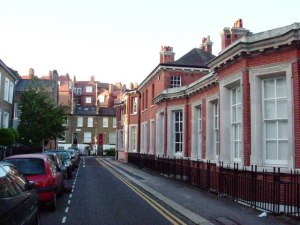
One of the warrant officers, a man known as Jock, was a caricature of a Scotsman, quite tall, balding with a fringe of red hair and a ferocious temper. His role was to run the list for the court. When a defendant arrived at the courthouse, whether on bail or brought by the prison van, they were ticked off on the sheets kept by the warrant officer. A defendant’s lawyer would, after seeing his client, tell the officer what application he would be making to the Magistrate. The policeman would then decide the order in which cases would be called, usually depending on the kind of application. Adjournments where there were no applications usually went first, then applications for bail and pleas in mitigation were left to the end. The solicitors appearing in the case before the magistrate were always keen to get their cases on as soon as possible; there was always more work to be done in the office, or another court to attend.
Jock tended to favour local solicitors when deciding on what order to call cases into court, barristers and out of area solicitors were usually put to the back. However, if for some reason you offended him, your case would be put down the list. It was often difficult to know what you had done to upset him. Not being deferential enough was perhaps the most common offence, but there were others. I soon learnt that the best way of getting my cases on first was to make sure I upset him as early as possible. My cases would go to the bottom of the list, but by the time the hearing began, I could guarantee that other lawyers would also have committed some error and their cases too would be transferred to the bottom and as they did so, my clients would get nearer the top. Just a question of tactics.
Life at the Bar – The Man in the White Suit
I am not referring to the journalist, Martin Bell, who stood for Parliament some years ago but to a solicitor who had an office close to West London Magistrates Court. This was before it moved to being in the shadow of the Hammersmith Flyover. I had only just started working for another local solicitor’s practice as the second string advocate, when the outdoor clerk, a Welsh lady who liked a drink or two or may be three, told me I needed to meet Bob. 
‘He’s really good looking, and single,’ she said acknowledging my own status. And so he was, six feet tall, a mop of dark hair and a sonorous voice with just a trace of an accent I recognised as being like my own. He was one of the many Lancastrians who had moved to London hoping to make their fortune in the big city.
When the court doors opened in the morning, the outdoor clerk would dash across the road to see if any of our regular clients were in the cells, and to try and get our share of the unrepresented prisoners. She would then come back into the office and prepare a list of the cases we had to cover. There were two courtrooms in the building and I was meant to do the shorter list, usually with the less serious cases and the man who was the main advocate would do the more important ones. It never seemed to work out that way and I found myself covering most of the work in both courts, which brought me into contact with the ‘man in the white suit.’
Actually it wasn’t his usual choice of dress, he normally wore a grey or navy blue pinstripe, but sometimes in the summer and when he wanted to make a dramatic entrance into court, he wore white. I liked Bob, but quickly worked out that he was not the man for me; far too eccentric.
However we worked well together in the courtroom even though we were competitors for business. A long list of clients meant there was too little time to see them all before the stipendiary magistrate came into court. Bob and I learnt to work the list officer so that our cases were not listed consecutively and so allowing a little time to see a client who had not yet appeared.
Cases in the magistrates’ court can be very amusing, and West London had its quota of fun, often provided by the homeless men who lived on and around Shepherds Bush Green. They were usually brought before the court for being drunk and disorderly, and although we wouldn’t be paid both Bob and I often addressed the court on their behalf. One man, it was impossible to tell his age from his appearance, he was so unkempt in a dirty mac, torn green sweater and a once white shirt was before the court for stealing a tin of salmon. He was one of Bob’s clients and this was one of his white suit days. The contrast could not have been more striking.
The defendant pleaded guilty to the theft and Bob stood up to mitigate on his behalf. He was immediately interrupted by the Magistrate, ‘Your client has been in prison too many times. What am I going to do with him? Send him back for a tin of salmon?’
‘That’s exactly what I am asking you to do. The last time he was in custody, he got his teeth seen to. The upper jaw. He’d like to go back to get his lower ones sorted out. That’s why he stole the tin of salmon. He needs a sentence of a least three months for the prison service to sort that out,’ said Bob. 
He got his three months. Whether he got his teeth sorted out, I don’t know because that winter he died of exposure, and it was me and Bob together with the list officer who organised a whip round to pay for his funeral.
Life at the Bar – The Stipendiary Magistrate
During my time in Blackpool I had only appeared in front of lay magistrates. Those upstanding members of the local community who the Lord Chancellor’s Department thought were fit and proper persons to dispense justice to their fellow citizens. They often lacked any real understanding of the law and sometimes struggled to assimilate the facts of a case, but I am sure they did their best. Often they had unqualified staff as court clerks who didn’t know the law either. That has all changed now and court clerks have to be qualified lawyers if they are advising the bench of magistrates on legal matters, and the justices of the peace are given much more thorough training.
My move to live in London, driven by the sexist behaviour in my home county and by my love of the theatre, brought me into contact with a different kind of JP, the stipendiary magistrate. They were a fearsome bunch and, at first, I was a little in awe of them. Over ninety per cent of all criminal cases are dealt with in the magistrates’ courts and the stipendiary magistrates, whether a solicitor or a barrister were much quicker at dealing with cases and expected those appearing in front of them to be brief.
St. John Harmsworth sat at the court in Marlborough Street, in the heart of the West End, next to the London Palladium and just across the road from Liberty’s. He was extremely punctual,  walking briskly into court dressed in a pinstripe suit, a military tie of navy blue and dark red stripes and a fresh rose in his button hole. If he was strict in his interpretation of the law, he was also humane.
One morning I was sitting in court waiting for my case to be called on, when a fifty year old was brought into the dock. He had been charged with being drunk and disorderly. The arresting officer (they went to court then) stood in the witness box and said he had stopped the defendant as he been staggering on his feet on Oxford Street at about eight o’ clock that very morning.
‘I spoke to him to ask his name, Sir, and noticed his breath smelt of alcohol, his speech was slurred and he was unsteady on his feet, Sir,’ the policeman said. This was a formula all officers used when describing somebody as drunk.
The warrant officer, the man who controls the order the cases are called before the bench, moved forward and said, ‘He was only released from Pentonville this morning, Sir.’
‘What time were you released from custody?’ said St. John Harmsworth, addressing the man in the dock. 
‘Six, Sir.’
‘How did you manage to get drunk between six and eight?’
‘Well, your honour.’ (Defendants in the magistrates’ court frequently get the form of address wrong. Only Crown Court Judges are addressed as Your Honour.) ‘It’s my birthday and the lads in the kitchen at Pentonville brewed some hooch and we spent the night drinking.’
St. John Harmsworth looked at the charge sheet in front of him. ‘So it is. Well as it’s your birthday I’ll fine you five pounds or one day,’ he said. There was no need to explain to the defendant that t one day meant he was to stay in custody for the remainder of the court day. It was a common way of dealing with those whose offences were minor and means were limited.
As the prisoner was being led away the learned magistrate said to the warrant officer, ‘Release him as soon as he’s sobered up.’
In these changing times I was a little sad to see the court I had been to so often is now a boutique hotel.
Life at the Bar – Going Equiped
The offence of going equipped to commit burglary doesn’t seem to feature in the courts these days, but as an articled clerk I was sent to sit behind Mark Carlisle on just such a case. The two defendants, both male, had been apprehended in one of the lanes in the countryside, inland of Blackpool. The evidence against them consisted of observations by the police to whom they were well known and the various objects found inside their car, a grey Vauxhall, I think. 
The offence took place on a summer’s evening when an observant police officer had seen the two men, Ken and Norman, driving along a narrow lane that led down towards the River Wyre. He knew it was a dead end, so he radioed for help and an unmarked car arrived. When the Vauxhall emerged from the lane and turned along the main road, the police care followed at a discreet distance. The car then turned down another of the lanes which went towards the River, another dead end. The police stayed on the main road keeping watch. This was repeated a third time, but this time the police followed and as it reached the entrance to a large house sat in extensive grounds, they indicated the Vauxhall was to pull over.
Norman and Ken got out of the car and went to meet the officers. As the two policemen, DC Smith and DC McKie, approached Norman, he pulled his wallet from the back pocket of his trousers and began searching through it.
‘Here’s my driving licence and I’ve got insurance as well,’ Norman said, waving the pieces of paper under the DC Smith’s nose.
‘Thanks,’ said the officer, pushing away Norman’s arm. ‘Let’s have a look in the car shall we.’
All four men strode over towards the car. ‘What you doing round here?’ DC McKie said. He rolled his r’s and looked straight at Ken, who dropped his gaze.
‘Looking for work. Been told some guy wanted a job on his roof,’ Ken said.
‘What’s this guy’s name then?’ McKie said.
‘Don’t know, just told where he lived.’
By this time they had all reached the vehicle and the two officers opened the boot. Inside was a bag of tools, spanners, screw drivers, a couple of hammers, and laid across the base the dark metal of a crowbar glinted in the low summer sun.
‘Doing a roof were we; with a crowbar.’ McKie wasn’t expecting an answer.
Norman spluttered. ‘Yes, guv. We were going to see this guy about some work.’
‘Where does he live, this bloke you were going to see?’ Smith said, as he opened the front passenger door.
On the floor was a piece of paper torn from a reporter’s notepad, the type anyone can buy in WH Smith’s. ‘We had a map…’ Ken pushed past the officer, leant into the vehicle and picked up the sheet of paper. ‘We’d met this guy in the pub. Said he had a few jobs we could do and he drew this map of where his house was. Here, see.’ He thrust the piece of paper into DC Smith’s hand.
The map had been drawn by an inexpert hand, but it clearly showed a lane of the main Cleveleys to Singleton Road. The drawing showed two or three houses along a twisting lane that led down to towards the River.
DC Smith sucked his teeth as he contemplated whether to arrest the two men. He didn’t believe a word they were saying, but with a good defence lawyer they would probably be acquitted. Was it worth the paperwork involved; whatever they were up to they had been stopped in their tracks.
‘Well not sure…’ he said, but was interrupted by DC McKie who was holding a book in his hand.
‘What’s this. A copy of Who’s Who. Now what would you be wanting with this then?’
They were arrested and charged with going equipped with a crow bar, spanners, various tools and a copy of Who’s Who. Despite Mr Carlisle best endeavours both men were convicted.
Life at the Bar – Discretion Statement.
 Before the law on Divorce altered in the early 1970’s the petitioner – that’s the person seeking the divorce- had to establish one of a number of matrimonial offences. Cruelty, adultery, or separation for two years were the main causes I remember. And because it was an equitable relief, the clue is in the word petitioner, the husband or wife seeking the divorce had to come to the court ‘with clean hands.’ In practice this caused a lot of problems as very often the petitioner was in another relationship and so the courts had established the procedure known as the discretion statement. In effect, the erring party asked the court to grant their petition for a divorce notwithstanding their own adultery.
Soon after I qualified as a solicitor I had just such a case. The wife, Helen Broad was a glamorous blonde, and she had left her husband and was living with another man. She and I discussed at length how to deal with her discretion statement and agreed on a wording that essentially said she had entered into another relationship and had committed adultery on numerous occasions over the preceding two years. The statement was signed by her and placed in a sealed envelope, as was the practice.
On the day of the hearing of Helen Broad’s petition, we met the barrister, David Fox, I had instructed to appear on her behalf, in the waiting area of the County Court. He towered over both me and the client, as I introduced her to him.
Helen was wearing a pale camel coat, her long hair was loose and she had bright red lipstick. She was the best-looking woman in the room and David took her hand and held onto it for a little longer than necessary, before directing us to a quiet a corner where he could discuss the case and try to put Helen at ease. David manoeuvred his not inconsiderable bulk down onto a chair and pulled it up close to where we were sitting on a bench.
‘Is there a discretion statement?’ he said.
I searched through my file and handed him the brown envelope containing the carefully crafted disclosure. He opened it, his heavy fingers tearing the paper apart and rather more carefully opened the piece of paper inside. He fished his glasses out of his top pocket of his dark pin-striped suit and began to read. The petitioner watched him, her mouth in a wide smile but the eyes suggested she was a little wary.
David looked over the top of his glasses, ‘Don’t you know how many times you have committed adultery?’
Helen Broad looked him straight in the face and said, ‘I don’t count, do you?’
Life at the Bar – A sack of potatoes and a bottle of Teepol
Not a murder, but still one of the most interesting cases I was involved in. The client, Max was a fisherman. He sailed in small boats out of Fleetwood, when there was still a fishing fleet in the north Lancashire town. The basis that these small trawlers worked on was called share fishing. The boat’s owners took the major share of the profits on the catch and the remainder was split between the rest of the sailors. On this trip the Goodwill had a crew of five. Max was the fishing skipper; the defacto captain of the ship. He wasn’t a certificated captain so there was on older man who was, but Max really ran the boat and directed where they would sail and where they would put the nets down. He was the man with the ‘nose’ for the shoals. 
This particular night they were fishing in the Irish Sea. One of the crew was on watch and Max had gone to his bunk to sleep. The sea was running high and the small boat rolled and pitched. It was cold and the fire in the cabin had been lit. Suddenly the boat was hit by a large wave and the gas bottle in the galley, secured in place by a sack of potatoes and a bottle of Teepol came loose and rolled along the deck and into the cabin.
Max was woken as the gas from the bottle exploded. He grabbed his clothes and ran through a wall of fire onto the deck. The rest of the crew had already got the lifeboat over the side and they all jumped into it. They were in the life raft for three days before they were picked up by another boat and taken to the Isle of Man. Here Max was treated for the burns he had suffered as he dashed from the cabin. He needed extensive skin grafts to his face and hands. He was devastatingly charming despite being very disfigured.
He sued the boats owners for damages for the injuries he had sustained, on the basis they had failed to provide proper housing for the gas bottle in the galley. The owners denied liability saying they were not his employers and did not owe a duty of care to him or the rest of the crew. The judge disagreed and awarded Max substantial damages.
I had driven then to the final hearing, which took place in Chester, in my principal’s car which broke down on the way back. Fortunately my passengers were too elated to worry about the delay caused and waited patiently at the roadside until we were rescued b
Broadchurch Episodes 3 & 4
The series continues with heightened drama but the representation of the legal process is corrupted by the story line. 
In episode 3 the prosecution call DC Miller, the wife of the defendant, and while there is nothing intrinsically wrong with that; the law is that a wife is a competent witness against her husband, but she is not compellable. What that means is that her evidence is capable of belief but if she declines to give evidence she cannot be forced to do so. In the circumstances where she is known to have assaulted her husband, I think most barristers would be reluctant to call her. She added very little to the issues for the jury.
Episode 4 has a number of glaring errors in the trial scenes. It is a long time since a witness was allowed to make a dock identification. In a real trial, if that was to happen, the defence would ask for the jury to leave the court and make an application for a retrial. Actually it makes Justine look incompetent as she allows the witness to deviate from her witness statement by asking if she recognised the man. There was no need for the question; the witness had given the evidence about seeing a man already, although what evidential value that had was difficult to understand. If the judge ruled that the trial should continue, cross-examination would be much more rigorous. The witness would have been asked about her previous statement, the time she made it and why she had left out the name of the man she saw. It is one of the common mistakes that a witness makes to say I told the police but they left it out. The police officer who took the statement would then be called and would inevitably say that the witness had not identified the person they saw and the defence can then assert that the witness is at best unreliable or a liar.
I did like the part where the defence silk says to her junior who is convinced their client is guilty, ‘Don’t say that. We never know for sure. He gets his defence.’ The sort of comment a real barrister would make to a pupil, particularly one who is described by her opponent as a rottweiler.

 scribblingadvocate