Life at the Bar – The Arsonist
Arson is a frightening offence, smoke and flames can not only cause enormous damage but the risk to lives is always present. Early in my legal career a fire at one of the public houses in Blackpool was particularly frightening. Fortunately, no one was hurt, but the fire caused extensive damage to the premises and meant the doors were closed for days in the middle of the holiday season. When the police began to investigate it became obvious that the publican’s son had watched the blaze and taken photographs of the fire appliances. 
As the enquiry continued the Sergeant in charge found a scrap book which contained photographs taken at the scene of other fires in Blackpool, newspaper cuttings about other cases of arson and a broken footplate from a fire engine. The publican’s son was arrested and interviewed under caution, during which, although at first denying setting the fire, he did eventually admit that he had. He was charged and I was instructed to represent him.
When the fire broke out the defendant’s parents were not in the property, but his grandmother was and because of that he was charged with arson with intent to endanger life. The fire was attended by three fire engines and put the lives of a large number of firemen at risk.
The young man, my recollection was that he was in his twenties, had an interesting background. He had left school at sixteen and he wanted to join the fire brigade, but his application was refused. He was turned down again when he made further applications. He became obsessed with the fire brigade and set the fire at the public house so that he could watch the fire engines turn up and fight the fire.
The case was heard at the Lancaster Crown Court before a High Court Judge. He pleaded guilty and when the sergeant was called to give evidence of the defendant’s previous convictions, he took a very unusual step. When prosecuting counsel indicated he had no more questions for the officer, the detective sergeant turned to the judge and said, ‘My lord, I do want to say that during the course of the investigation I have spent time talking to the defendant’s grandmother; she is not well and I believe if the defendant was sent to prison it would hasten her death.’
The judge listened carefully to what the officer said and the other mitigation put forward by defence counsel. When he passed sentence he explained to the defendant that the sentence for arson with intent to endanger life was a period in prison, but because of the unusual plea made by the policeman on his behalf he would pass a sentence that allowed the defendant to return to his family within a matter of weeks.
Life at the Bar – A question of tactics
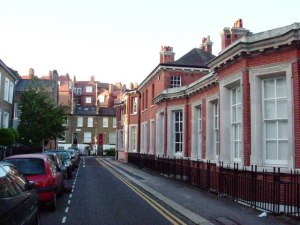
When I was still employed as a solicitor, West London Magistrates’ Court was in Southcombe Street W14; a redbrick building with an impressive entrance in white stone. On the floor, as you entered was a mosaic of the Metropolitan Police crest, a reminder that this had been called a police court when it first opened. The name may have been changed, but the court was still run by police officers. They organised the list of defendants and had an office where they collected the fines imposed by the magistrates. Solicitors were allowed into the cell area to take instructions from their clients and that also gave access to the small room at the back of a waiting area where the matron dispensed cups of tea for a small sum. It was here that, if you had made friends with the local CID you would be given a brief outline of the evidence against a client. There was no practice of serving statements in cases that were to be heard by the magistrates. Only if the case was being committed to the Crown Court would a lawyer get to see the evidence against the defendant.
One of the warrant officers, a man known as Jock, was a caricature of a Scotsman, quite tall, balding with a fringe of red hair and a ferocious temper. His role was to run the list for the court. When a defendant arrived at the courthouse, whether on bail or brought by the prison van, they were ticked off on the sheets kept by the warrant officer. A defendant’s lawyer would, after seeing his client, tell the officer what application he would be making to the Magistrate. The policeman would then decide the order in which cases would be called, usually depending on the kind of application. Adjournments where there were no applications usually went first, then applications for bail and pleas in mitigation were left to the end. The solicitors appearing in the case before the magistrate were always keen to get their cases on as soon as possible; there was always more work to be done in the office, or another court to attend.
Jock tended to favour local solicitors when deciding on what order to call cases into court, barristers and out of area solicitors were usually put to the back. However, if for some reason you offended him, your case would be put down the list. It was often difficult to know what you had done to upset him. Not being deferential enough was perhaps the most common offence, but there were others. I soon learnt that the best way of getting my cases on first was to make sure I upset him as early as possible. My cases would go to the bottom of the list, but by the time the hearing began, I could guarantee that other lawyers would also have committed some error and their cases too would be transferred to the bottom and as they did so, my clients would get nearer the top. Just a question of tactics.
Life at the Bar – The Stipendiary Magistrate
During my time in Blackpool I had only appeared in front of lay magistrates. Those upstanding members of the local community who the Lord Chancellor’s Department thought were fit and proper persons to dispense justice to their fellow citizens. They often lacked any real understanding of the law and sometimes struggled to assimilate the facts of a case, but I am sure they did their best. Often they had unqualified staff as court clerks who didn’t know the law either. That has all changed now and court clerks have to be qualified lawyers if they are advising the bench of magistrates on legal matters, and the justices of the peace are given much more thorough training.
My move to live in London, driven by the sexist behaviour in my home county and by my love of the theatre, brought me into contact with a different kind of JP, the stipendiary magistrate. They were a fearsome bunch and, at first, I was a little in awe of them. Over ninety per cent of all criminal cases are dealt with in the magistrates’ courts and the stipendiary magistrates, whether a solicitor or a barrister were much quicker at dealing with cases and expected those appearing in front of them to be brief.
St. John Harmsworth sat at the court in Marlborough Street, in the heart of the West End, next to the London Palladium and just across the road from Liberty’s. He was extremely punctual,  walking briskly into court dressed in a pinstripe suit, a military tie of navy blue and dark red stripes and a fresh rose in his button hole. If he was strict in his interpretation of the law, he was also humane.
One morning I was sitting in court waiting for my case to be called on, when a fifty year old was brought into the dock. He had been charged with being drunk and disorderly. The arresting officer (they went to court then) stood in the witness box and said he had stopped the defendant as he been staggering on his feet on Oxford Street at about eight o’ clock that very morning.
‘I spoke to him to ask his name, Sir, and noticed his breath smelt of alcohol, his speech was slurred and he was unsteady on his feet, Sir,’ the policeman said. This was a formula all officers used when describing somebody as drunk.
The warrant officer, the man who controls the order the cases are called before the bench, moved forward and said, ‘He was only released from Pentonville this morning, Sir.’
‘What time were you released from custody?’ said St. John Harmsworth, addressing the man in the dock. 
‘Six, Sir.’
‘How did you manage to get drunk between six and eight?’
‘Well, your honour.’ (Defendants in the magistrates’ court frequently get the form of address wrong. Only Crown Court Judges are addressed as Your Honour.) ‘It’s my birthday and the lads in the kitchen at Pentonville brewed some hooch and we spent the night drinking.’
St. John Harmsworth looked at the charge sheet in front of him. ‘So it is. Well as it’s your birthday I’ll fine you five pounds or one day,’ he said. There was no need to explain to the defendant that t one day meant he was to stay in custody for the remainder of the court day. It was a common way of dealing with those whose offences were minor and means were limited.
As the prisoner was being led away the learned magistrate said to the warrant officer, ‘Release him as soon as he’s sobered up.’
In these changing times I was a little sad to see the court I had been to so often is now a boutique hotel.
Life at the Bar – Going Equiped
The offence of going equipped to commit burglary doesn’t seem to feature in the courts these days, but as an articled clerk I was sent to sit behind Mark Carlisle on just such a case. The two defendants, both male, had been apprehended in one of the lanes in the countryside, inland of Blackpool. The evidence against them consisted of observations by the police to whom they were well known and the various objects found inside their car, a grey Vauxhall, I think. 
The offence took place on a summer’s evening when an observant police officer had seen the two men, Ken and Norman, driving along a narrow lane that led down towards the River Wyre. He knew it was a dead end, so he radioed for help and an unmarked car arrived. When the Vauxhall emerged from the lane and turned along the main road, the police care followed at a discreet distance. The car then turned down another of the lanes which went towards the River, another dead end. The police stayed on the main road keeping watch. This was repeated a third time, but this time the police followed and as it reached the entrance to a large house sat in extensive grounds, they indicated the Vauxhall was to pull over.
Norman and Ken got out of the car and went to meet the officers. As the two policemen, DC Smith and DC McKie, approached Norman, he pulled his wallet from the back pocket of his trousers and began searching through it.
‘Here’s my driving licence and I’ve got insurance as well,’ Norman said, waving the pieces of paper under the DC Smith’s nose.
‘Thanks,’ said the officer, pushing away Norman’s arm. ‘Let’s have a look in the car shall we.’
All four men strode over towards the car. ‘What you doing round here?’ DC McKie said. He rolled his r’s and looked straight at Ken, who dropped his gaze.
‘Looking for work. Been told some guy wanted a job on his roof,’ Ken said.
‘What’s this guy’s name then?’ McKie said.
‘Don’t know, just told where he lived.’
By this time they had all reached the vehicle and the two officers opened the boot. Inside was a bag of tools, spanners, screw drivers, a couple of hammers, and laid across the base the dark metal of a crowbar glinted in the low summer sun.
‘Doing a roof were we; with a crowbar.’ McKie wasn’t expecting an answer.
Norman spluttered. ‘Yes, guv. We were going to see this guy about some work.’
‘Where does he live, this bloke you were going to see?’ Smith said, as he opened the front passenger door.
On the floor was a piece of paper torn from a reporter’s notepad, the type anyone can buy in WH Smith’s. ‘We had a map…’ Ken pushed past the officer, leant into the vehicle and picked up the sheet of paper. ‘We’d met this guy in the pub. Said he had a few jobs we could do and he drew this map of where his house was. Here, see.’ He thrust the piece of paper into DC Smith’s hand.
The map had been drawn by an inexpert hand, but it clearly showed a lane of the main Cleveleys to Singleton Road. The drawing showed two or three houses along a twisting lane that led down to towards the River.
DC Smith sucked his teeth as he contemplated whether to arrest the two men. He didn’t believe a word they were saying, but with a good defence lawyer they would probably be acquitted. Was it worth the paperwork involved; whatever they were up to they had been stopped in their tracks.
‘Well not sure…’ he said, but was interrupted by DC McKie who was holding a book in his hand.
‘What’s this. A copy of Who’s Who. Now what would you be wanting with this then?’
They were arrested and charged with going equipped with a crow bar, spanners, various tools and a copy of Who’s Who. Despite Mr Carlisle best endeavours both men were convicted.
Life at the Bar – Discretion Statement.
 Before the law on Divorce altered in the early 1970’s the petitioner – that’s the person seeking the divorce- had to establish one of a number of matrimonial offences. Cruelty, adultery, or separation for two years were the main causes I remember. And because it was an equitable relief, the clue is in the word petitioner, the husband or wife seeking the divorce had to come to the court ‘with clean hands.’ In practice this caused a lot of problems as very often the petitioner was in another relationship and so the courts had established the procedure known as the discretion statement. In effect, the erring party asked the court to grant their petition for a divorce notwithstanding their own adultery.
Soon after I qualified as a solicitor I had just such a case. The wife, Helen Broad was a glamorous blonde, and she had left her husband and was living with another man. She and I discussed at length how to deal with her discretion statement and agreed on a wording that essentially said she had entered into another relationship and had committed adultery on numerous occasions over the preceding two years. The statement was signed by her and placed in a sealed envelope, as was the practice.
On the day of the hearing of Helen Broad’s petition, we met the barrister, David Fox, I had instructed to appear on her behalf, in the waiting area of the County Court. He towered over both me and the client, as I introduced her to him.
Helen was wearing a pale camel coat, her long hair was loose and she had bright red lipstick. She was the best-looking woman in the room and David took her hand and held onto it for a little longer than necessary, before directing us to a quiet a corner where he could discuss the case and try to put Helen at ease. David manoeuvred his not inconsiderable bulk down onto a chair and pulled it up close to where we were sitting on a bench.
‘Is there a discretion statement?’ he said.
I searched through my file and handed him the brown envelope containing the carefully crafted disclosure. He opened it, his heavy fingers tearing the paper apart and rather more carefully opened the piece of paper inside. He fished his glasses out of his top pocket of his dark pin-striped suit and began to read. The petitioner watched him, her mouth in a wide smile but the eyes suggested she was a little wary.
David looked over the top of his glasses, ‘Don’t you know how many times you have committed adultery?’
Helen Broad looked him straight in the face and said, ‘I don’t count, do you?’
Life at the Bar – A sack of potatoes and a bottle of Teepol
Not a murder, but still one of the most interesting cases I was involved in. The client, Max was a fisherman. He sailed in small boats out of Fleetwood, when there was still a fishing fleet in the north Lancashire town. The basis that these small trawlers worked on was called share fishing. The boat’s owners took the major share of the profits on the catch and the remainder was split between the rest of the sailors. On this trip the Goodwill had a crew of five. Max was the fishing skipper; the defacto captain of the ship. He wasn’t a certificated captain so there was on older man who was, but Max really ran the boat and directed where they would sail and where they would put the nets down. He was the man with the ‘nose’ for the shoals. 
This particular night they were fishing in the Irish Sea. One of the crew was on watch and Max had gone to his bunk to sleep. The sea was running high and the small boat rolled and pitched. It was cold and the fire in the cabin had been lit. Suddenly the boat was hit by a large wave and the gas bottle in the galley, secured in place by a sack of potatoes and a bottle of Teepol came loose and rolled along the deck and into the cabin.
Max was woken as the gas from the bottle exploded. He grabbed his clothes and ran through a wall of fire onto the deck. The rest of the crew had already got the lifeboat over the side and they all jumped into it. They were in the life raft for three days before they were picked up by another boat and taken to the Isle of Man. Here Max was treated for the burns he had suffered as he dashed from the cabin. He needed extensive skin grafts to his face and hands. He was devastatingly charming despite being very disfigured.
He sued the boats owners for damages for the injuries he had sustained, on the basis they had failed to provide proper housing for the gas bottle in the galley. The owners denied liability saying they were not his employers and did not owe a duty of care to him or the rest of the crew. The judge disagreed and awarded Max substantial damages.
I had driven then to the final hearing, which took place in Chester, in my principal’s car which broke down on the way back. Fortunately my passengers were too elated to worry about the delay caused and waited patiently at the roadside until we were rescued b
Broadchurch
I didn’t watch the first series, but the criticism about the courtroom drama in the current series has been such that I decided to catch up with the first two episodes with the benefit of the BBC i player I have now done that. Oh dear, they may have had a legal consultant but the script writer must have ignored any advice they were given. I know the fact that the Bar is a referral profession is  inconvenient for drama, but the writer could have made a little more reference to reality. I cannot imagine any solicitor instructing someone who has not been in practice for three years ever; the law changes and the skills need to be kept up, never mind the question of a practising certificate.
Then the prosecuting barrister asks the police officer in the case to visit her at home to discuss his evidence about injuries to the defendant. The defendant’s wife appears to have been invited as well. I know she is an important character in the plot, but surely a little more thought might have dealt with this issue in a more realistic way. Then she discusses with them the injuries and tells them they need to find a good reason for the assault on a prisoner. No decent lawyer would do that; she was almost telling them what to say
In the trial process, prosecuting counsel would not refer to the confession in opening the case to the jury and arguments around the issue of admissibility of a confession are made in the absence of the jury. Defence counsel did quote the correct sections of the Police and Criminal Evidence Act, but that was the only bit that was right. Surely it would have been just as dramatic to have the legal argument in the courtroom and then switch to the family outside in the waiting area worrying about what was going on.
My main complaint is the idea that the prosecuting barrister is the bereaved family’s lawyer. Criminal Prosecution are taken on behalf of the state, ‘Regina v Miller,’ not the victim or their relatives. The way it has been portrayed is misleading to ordinary members of the public who may be involved as witnesses or where a family member is a victim of crime. Writers of popular series have in my view a responsibility to ensure viewers are not given a totally misleading impression of the way something as important as the criminal justice system works.
Oysters and George
I suppose George Carman was one of the more colourful members of the Bar and my first meeting with him was a little strange to say the least. I was still an articled clerk and I was sent to  Blackpool Quarter Sessions to sit behind him in a case of causing death by dangerous driving. He was a small rather busy man, always dressed in pinstripe trousers with a black jacket and the silk waistcoat worn by QC’s. The client was pleading guilty to the charge and after a rather tedious conference, with him George went off to do some work in the robing room. I was left sitting with the client until, about half an hour before the midday adjournment, I was summoned to see George.
‘Go and find out if there is any chance of our case coming on before lunch,’ he said. I did as I was told and scurried off to find the court usher. My enquiries revealed that we were unlikely to be called before the court rose. I returned with the news to the robing room. When I told George he snorted and said, ‘Damn, well I suppose we’d better make the best of it. Do you know where Robert’s Oyster Shop is on the promenade?’
It was a silly question; everyone living in Blackpool knew where to get oysters. I told him I did.
‘Good. Go and tell Robert I want a dozen oysters and a pint of Guinness and tell him I’ll pop in and pay later.’
I was to meet George on many occasions; there were a few other cases while I was still an articled clerk and then when I was living in London and had become a barrister, we frequented the same drinking holes, but I was never in the same case as him again until much later on in my career.
In early 1981 I was instructed to represent a solicitor who was charged with defrauding the Legal Aid Fund of many thousands of pounds. The case was tried in Manchester and I was being led by the leader of the Northern Circuit Mick Mcguire and George was prosecuting. As George called the various witnesses, court clerks, law society staff we began to undermine the prosecution case, which was based on a number of false premises, one of which was that a bail application would only take ten minutes of court time. That was torpedoed when a bail application was interposed in our trial; the judge said it would only take fifteen minutes at the most. It took over an hour as Mick Mcguire pointed out. George was clearly getting rattled as we scored again and again, until one lunch time we heard him on the telephone to the Director of Public Prosecutions. ‘I can take a few bullet holes below the waterline but a bombshell is too much.’
No oysters for George that day.
Life at the Bar – second murder case
I received the telephone call at about nine o’ clock in the evening. The police officer on the other end of the phone asked me if I could come to the station in Blackpool immediately. They had woman in custody and they thought she should speak to a solicitor. This was before the days of the Police and Criminal Evidence Act and asking any lawyer to see a prisoner before they were interviewed and charged was unusual.

Noahs Ark
‘It’s a serious case. She’s stabbed her husband and he’s in surgery at the moment. If he dies….’ His voice trailed off leaving me to deduce she might be charged with murder.
When I arrived at the police station in central Blackpool, I was shown into a cell where I saw Eleanor for the first time. She was in her late thirties, dressed in a tweed skirt and a thin blue sweater. Sitting upright in the edge of the concrete shelf that served as a bed, she was twisting and turning a white handkerchief in her hands. Her wedding ring caught the light from the single bulb.
‘Is there any news,’ she said.
I shook my head and said ‘No, not yet.’ And before she could say anything I sat down next to her and introduced myself.
‘Yes, the solicitor. They told me you were coming.’ She continued to turn the handkerchief over. ‘I didn’t mean to kill him.’
‘We don’t know that you have.’ I took hold of her hand.
‘We had such a row. He’d come in late the night before. Playing football. More likely down the pub. I’d had his dinner waiting for him since six. He said he didn’t want it. He went to work this morning, whistling away to himself. I thought I’ll show you. He came home at midday and I gave him the meal I’d prepared the previous night. What’s this he said?.I told him, it’s your dinner. He went mad and was swearing at me, then he picked up the plate and threw it at the wall. I went over and grabbed his arm. He shook me off and ran upstairs, pulled my clothes out of the wardrobe and starting ripping them. I tried to get hold of him but he pushed me away and went back downstairs. I followed and he told me to get out of the house. He opened the front door and tried to force me to leave. I told him I wasn’t going and ran into the kitchen. That’s where it happened. We were struggling, throwing pots and pans at each other. He was shouting at me to leave and I was screaming. I was backed up against the table and I reached back and the bread knife was there. I picked it up and thrust it at him.’
She began to sob. ‘That’s when the police officers rushed in and they took him away.’
I had been told that two off duty officers had been passing when they heard the sounds of a fight coming from the house. They’d rushed into the house and seeing Eleanor’s husband with the handle of a knife protruding out of his stomach, had carried him to their car and while one drove to the Hospital, the other held the knife in place and tried to staunch the flow of blood from the wound.
Eleanor continued to cry and I sat and held her hand. A police woman brought us cups of tea as we waited for news. A little later another officer and came and gave us a couple of blankets. I still had my coat, so I tucked one round her legs and the other over her shoulders. From time to time she still shivered. I pulled my coat around me. Eventually in the early hours of the morning, the officer who had summoned me to the police station, came into the cell..
‘He’s out of theatre and he’s going to live,’ he said.
Eleanor who had stood up when he came into the cell, sank back onto the bed, bent over and began to weep. I picked up the blanket and wrapped it round her again.
‘I think I’ll get matron. Perhaps she can give you something,’ the officer said. ‘Miss Barnes will want to go.’
‘I’ll see you tomorrow,’ I said.
Matron bustled in and took over. I left the cell with the officer and once away from the cell where I could not be overheard by Eleanor I said, ‘Will you charge her?’
‘Yes, Attempted murder. I assume you’ll be in court tomorrow.’
‘Yes.’ I said.
Eleanor was lucky. Not only did her husband survive the assault but after she pleaded guilty he pleaded with the judge for mercy and she was given a suspended sentence.
But I received no payment for the night I spent in the cells.
Eleanor was fortunate, her husband lived and what is more went to court to plead on her behalf
My Life at the Bar – First Murder Case
First Murder Case
The cell under the courtrooms at Blackpool was bare, the walls and floor the dull grey of unpainted concrete. There was no furniture. In the corner of the room crouched down, his head touching his knees, and rocking to and fro was the figure of my client, David W. He was dressed in a curious mix of ill-fitting clothes garnered from some unknown source; his own clothes having been taken for examination by forensic scientists. The door of the cell closed with the thud of heavy metal behind me and for a moment the rocking ceased as he looked in my direction. 
‘I loved her. Why would I kill her?’
‘Do you want to tell me about it?’ I said.
The rocking began again. As I waited I thought about David’s wife, Lynn, a thin anxious woman in her early twenties and known locally as the Mandie Queen, on account of her swallowing Mandrax tablets like they were sweets. Her body had been found three days ago lying naked on their bed in a rundown holiday flat on South Shore. The pathologist said she had died as a result of vagal inhibition when pressure was applied to her neck. That assault had resulted in the hyoid bone in her neck being fractured. Although her blood contained a high level of the drugs, they had not been the cause of death, indeed the level was insufficient to have killed her.
David continued to insist he had not murdered her. He said they had both smoked some cannabis and taken other illegally obtained drugs. Lynn had been totally out of it but was demanding he go out and get some food. He’d left her and gone to a local shop where he had bought some bread, ham and milk. When he returned to the flat she was lying on the bed asleep, but when he tried to rouse her he couldn’t. He felt for her pulse and then realised she wasn’t breathing. There was a stash of drugs in the flat, which he decided to get rid of before calling the police, but then he panicked and decided to run for it.
‘I loved her, why would I kill her?’ he repeated.
I didn’t tell him that I was aware he had been violent towards her in the past. Lynn had been to see me a few weeks previously, asking me to represent her in divorce proceedings. I had immediately told her I couldn’t do so as David was already my client, so I didn’t hear what she was complaining about, but a large bruise under her left eye told me all I needed to know.
I stood on the other side of the cell watching him rocking back and forth. It wasn’t really the image I had of a murderer. In my imagination they were tough, brutish, large men with snarling faces, a fairy tale thug, not this disturbed young man with a pale thin face and long dark curly hair who looked more like Prince Charming than a killer.
David maintained his plea of not guilty and the case was heard at Lancaster Assizes in the same court room where the Pendle witches were tried over four hundred years ago. The only issue in the trial was the cause of death, was she strangled or did she die of an overdose. The pathologist I had instructed took the view that the evidence of strangulation was weak, but when in giving evidence he accused the Home Office pathologist of breaking the hyoid bone in a clumsy dissection, the QC representing David advised him to plead guilty to manslaughter and he agreed to do so. He was sentenced to serve six years in prison, some of which he served at Parkhurst in the Isle of Wight, where his brother was serving a sentence for armed robbery.
A few years later the doctor we had instructed to give evidence about the effects of taking large quantities of Methaqualone, the active ingredient of Mandrax tablets sent me a paper published in a scientific journal which argued that the level of Methaqualone, in the kidneys was a better indication of poisoning than that in the blood stream. The levels in Lynn’s kidney was over the safe limit described in the paper.

 scribblingadvocate