Life at the Bar – Desperate Wives
Third Confession
I sat very still, hardly daring to breathe, the pages of the brief unturned in my hands. Had both women been telling the truth? Weren’t they the victims of violence not the perpetrators? I didn’t know what to think. 
Whilst I was turning these thoughts over, Sharon turned in her seat towards me. She appeared to be surprised I was still there but asked when they would be going into court. I said I didn’t know but the usher would call us when the court was ready. Sharon sighed and turned back to face her friends. The eldest of the three women reached over and patted Sharon’s hand. I had hardly noticed her before but now as she tried to comfort Sharon I saw that not only was she older then the others but she was dressed in more expensive clothes. Her white Mac was belted and she wore a blue silk scarf tightly knotted; both had seen better days. Her brown hair, which she wore in an untidy French pleat, was beginning to go grey and the lenses of her gold rimmed glasses were thick, emphasising her brown eyes.
It was completely dark outside; the only light in the room was from the street lamps and the lighting in the corridor. I went back to my papers. A telephone began to ring somewhere in the building and there was a squeal of brakes from outside. The familiar noises, breaking the silence, acted as a stimulus and conversation was resumed. They talked about the hostel and how difficult it was living with a number of other women and children. They spoke of who let their kids run riot, who didn’t do their share of cleaning the bathrooms and kitchen, who took other people’s food from the fridge and who always got their own choice of television programme. The eldest of the three women made very little contribution to the discussion until the talk turned to a child who played football in the garden, kicking the ball against the wall of the house for hours on end, then she said, ‘I like gardening. I miss having a garden at the hostel. It’s not the same when there are lots of other people walking all over it and picking the flowers. We had a nice garden at home. I spent a lot of time out there. It got me out of the way, being in the garden, particularly when Phil was in a bad mood. I like flowers – didn’t grow vegetables- perhaps a few tomatoes. Course, this time of year it’s a bit bare so I’d pot up some hyacinths for the house. I’d bought a bag of them in the market. Kept some of them back for planting outside. I had a nice blue bowl; the same colour as the flowers and when they began to grow, pale green shoots coming through, I put them in it and put them on the hall table. They did look lovely.’
She paused to light a cigarette from a green and white packet and I caught the faint scent of menthol. I wanted to ask them not to smoke any more but knew it was hopeless. They might stop for a few minutes but then they would light up again as the tension and boredom of waiting got to their nerves, so I said nothing. The older woman put the packet and a yellow cigarette lighter on the table, inhaled once and placed the cigarette on the ashtray. I watched as she continued to stare out into lamp lit street and saw her lower lip quiver. Was this woman about to admit to some similar incident? I sat very still, looking at but not reading the brief, and listened. The woman began slowly and without emotion.
‘He had such a temper and he came in that day in a right one. His tea wasn’t strong enough; I’d folded his newspaper the wrong way. It didn’t matter what I did, nothing was right.’ She raised her voice slightly as if she was reliving the event. ‘He was effing and blinding at me and I asked him to stop. He went from the lounge to the kitchen and back again, me following, trying to get him to stop swearing. We were pulling and pushing at each other. You know what it’s like?’
She turned to face the others and, even though I could not see their faces in the dim light, I saw them all nod. The woman moved her chair back so that she was facing the rest of the group. Her voice became stronger and she spoke more emphatically.
‘We were in the hall and he pulled away from me sweeping the flowers onto the floor. The pot broke, there was dirt all over the tiles and the stems of the plants were broken. I was really upset. I do like flowers. I’ll give you hyacinths I thought.’
She stopped and untied the scarf from around her neck, folded it neatly and pushed into her pocket, then pushed up the sleeves of her Mac, and continued. ‘So a couple of days later I asked him if he fancied a lamb stew. ‘Yes’ he said ‘That’ll be nice.’ I went to the butchers and bought a bit of neckend. I made a stew with carrots and peas but instead of onions I used the hyacinth bulbs. I peeled them, chopped them and fried them just as if they were the real thing. I put them with the meat and the other vegetables in a casserole, added some beer, to disguise the taste, and cooked it. When he came in from work I gave it to him. He asked me if I was having some. I told him I‘d had some earlier. He said he thought that it tasted a bit funny. ‘‘Mine didn’t’’ I told him. He went on and ate it all up. After about half an hour he started to sweat and said he was going to bed; he didn’t feel very well. He was in and out of bed all night going to the toilet and saying he felt sick. The next morning he looked awful; he was all grey and his eyes were dull. He told me to get the doctor. He told the doctor how bad he felt, going to the toilet all the time and feeling nauseous. The doctor said it was food poisoning and asked him what he’d eaten. He’d had a pie a lunchtime in the pub and the lamb stew. He said that the stew had tasted funny. I told the doctor mine hadn’t. ‘‘It must have been the pie.’’ the doctor said. Anyway, he got a week off work. Kept on about how I’d given him a dodgy stew. I never let on, even after we separated. I’ve never told anyone.’ She paused. ‘I do like a nice garden.’
Life at the Bar – Desperate Wives
The second confession
The youngest shifted uneasily in her seat; she was a thin pale woman in her twenties, her long face emphasised by her shoulder length, light brown hair. Her thin white blouse partly unbuttoned, revealing a gold necklace, was tucked into the waistband of a short denim skirt. She had taken off her leather bomber jacket and hung it over the back of her chair even though it was quite chilly.
The older woman returned to her seat, turning it so she could continue to look out of the window at the darkening skies. I pretended I was concentrating on my papers. Some sixth sense told me that I must remain sitting quietly if I wished to hear what this young woman was about to say. 
The threat to make a complaint to the police by her friend’s husband must have struck a chord with the young woman because she began by saying, ‘Mine did go to the police but they didn’t believe him. They told him he must have fallen down drunk and that’s how he’d got the cut on his head. I did laugh about it later but …..’ Her voice trailed off, she looked down and took a deep breath before continuing ‘Well he’s a big lad; they just couldn’t believe I could hit him that hard.’ She turned to the older woman. ‘He is a big bloke isn’t he?’ she asked.
‘Yes. You only come up to his armpit. I’m not surprised the police didn’t believe him.’
‘Course he was drunk. He’d gone up town to watch Arsenal; been drinking all day leaving me with the kids. He’d promised to come home straight after the match so I could go to Bingo with my Mum. When he came in he was plastered; wanting his tea. I had a go at him and told him to make his own. He still had his silly supporter’s hat on, a bowler painted in red and white stripes. He was sat there yelling about his tea, telling me what he wouldn’t do to me if I didn’t get him some food.’
I looked at the group of woman round the table. None of them were interested in what I was doing and I was able to observe the women without distracting them. I thought how little surprise they had shown at the violence being described. Whilst these thoughts were revolving in my head she saw a small tousled head appear at the corner of the window into the corridor. At first she couldn’t tell if it was a boy or a girl.
The young woman continued ‘So I picked up the poker and hit him over the head with it from behind. Once I started I just kept hitting until his hat lifted up from his head, sort of popped up, and the blood poured down his face in little streams. He looked at me, his eyes wide open; put his hands up to his face, touching it.’
She demonstrated, putting her hands to her forehead and then her cheeks. I looked at her and back to the head at the window. Now a face appeared, pressed hard against the pane of glass flattening the features, two small, grubby hands palms facing towards me either side of the face. I put my hand to my mouth and pressed my lips together to stop from smiling..
I could still hear the young woman.
‘I think he thought that I had poured something over his head. When he looked at his hands and saw that it was blood he made a dive for me but I got out of the way and he fell onto the floor. The hat came off and there was blood everywhere.’
The little boy- it clearly was a boy- moved back a little and, looking straight at me, opened his mouth and stuck his tongue out. I began to laugh and then tried to turn the sound into a cough. Sharon and the artistically dressed woman looked at me and frowned before turning back to listen to their friend.
‘I didn’t know if it was the booze or me hitting him that made him fall over, but I didn’t wait to find out. I grabbed the kids and ran to my mum’s. I wasn’t dressed properly, still had me slippers on. I didn’t dare go back. So, I stayed there and the police came looking for me. They said they’d found him in the street, drunk, with this nasty cut to his head and he’d told them I’d done it. ‘‘Don’t be silly.’’ I said, ‘‘Look at me I’m only half his size.’’
‘‘Well do you want to go and see him? He’s up at the hospital,’’ they said. ‘‘We’ll take you up there if you want.’’
‘‘No, I think I’ll wait ‘til he’s sobered up a bit.’’
‘‘Might be best.’ they said.’’
Outside in the corridor a middle-aged woman, wearing an usher’s robe, came into my view, grabbed hold of the boy by his arm and pulled him away, mouthing the word ‘Sorry’ as she did so.
The young woman who had been speaking put her hands to her face, covering her eyes, bent her head down towards the table, pushed her fingers through her hair, pulling it back from her face before looking round at the others and smiling tentatively at them.
‘I haven’t been back.’ She added.
To be continued.
Life at the Bar – Desperate Wives
Attempted Murder 1. I started to find the silence uncomfortable when this woman began to talk in a low voice. There was an urgency in the tone that made me want to listen. I turned my attention back to the papers on my lap, pretending to work and hide my interest in the conversation. The woman was talking in a low voice and I could only just hear what she was saying. ‘The doctor gave me antidepressants after I had each of the kids. I had this post natal depression. You know what it’s like?’ She paused and looked round at the others but there was no response to her question, so she continued.  ‘Mind you, it wasn’t really the babies that were the problem. It was him. He was always more violent just after the children were born. He’d wait ‘til I was breastfeeding and then start to hit me round my head. I couldn’t do nothing. Well you can’t do much holding a baby in your arms, can you?’ She didn’t pause for an answer but went on, ‘I’d just curl up over the little’un to protect him from his dad. The other two would be crying and pulling at him to try and stop him. But it made no difference; he’d just push them away. One year, it was the year Eddie was born, it was coming up to Christmas and I thought I’ve had enough. What I need is a nice quiet Christmas. So what did I do?’ She sat back, took a small, battered tin from her pocket, opened it, used the contents to prepare a thin cigarette which she lit and then inhaled deeply. ‘What did I do? Christmas Eve I got my pills and crushed them into his beer. Well he was too drunk to notice. That’ll keep him quiet I thought. He’ll have such a headache tomorrow he won’t want to get up and me and the kids can enjoy ourselves without him.’ I put my hand up to my mouth. The eldest of the woman looked towards me. I looked back at my papers and drew a question mark in the margin of the brief. That must have reassured her I was still working, the woman turned her attention back to the speaker who was tapping her left hand gently, but persistently, on the table top. ‘I thought he was about to go to sleep in the chair so I got him upstairs, got his clothes off and rolled him into bed. Well, it was quiet.’ she nodded as if to emphasis her words. ‘He slept all Christmas Day and Boxing Day as well. I thought I’d killed him.’ She took a quick intake of breath, put her cupped hand to her mouth and whispered, ‘Course, sometimes, I almost wish I had.’ ‘I kept going upstairs to see if he was still breathing. Eventually he came to. He couldn’t believe he’d slept through Christmas Day and Boxing Day. He went on at me until I told him what I’d done. I got a real pasting. He threatened to go to the police about it but he didn’t. For a while he laid off me, but then he started again. That’s it, I thought, I’m leaving.’ When no one spoke, I looked up. The woman who had told the tale caught my eye and then turned towards Sharon before shrugging her shoulders. In the silence a cell door banged shut on the floor beneath. The elder of the three got up and leant against the window ledge, putting her forehead against the cold glass. To be continued
How Much!?!?

The Daily Mail online is outraged at the £350,000 in legal aid given toMick and Mairead Philpott.Of course, this is not entirely correct. The Philpotts were not “given” £350,000 like some sort of lottery win. What they were given was a fair trial. What we, the public, got for that expense were safe convictions. Their victims, their children, got justice.
The outrage is sparked by the heinous nature of their crime. They were responsible for killing six children, their own children. Their notoriety was heightened by their lifestyle which was somewhat unconvential. And involved extensive reliance on benefits.
Imagine for a moment that they were innocent. That they had not committed this terrible crime. That they were innocent parents wrongly accused of murdering their own children. As they were at the outset of the trial. It was a trial process that determined they were responsible and needed…
View original post 1,083 more words
Life at the Bar-Desperate Wives
Not many people have heard three women admit to attempts on their husband’s lives in the course of one afternoon, but this is what happened to me. It all began when I went to a seaside town to appear in the County Court seeking an injunction for a young woman to prevent her partner harassing her. The long, high hall that ran the length of the courthouse was heaving. There were young men waiting to be called: some alone, others in groups or with teenage girls clinging to them. A few children ran around in ignorance of the nature of the building. Dark suited solicitors, carrying large files, moved amongst the crowd, marshalling their clients, and bewigged barristers tried to take last minute instructions above the chatter and the sound of shuffling feet. 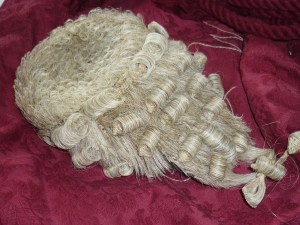
I threaded my way through the clusters of people until I found my client, Sharon Hurst, a young looking nineteen year old with long, wispy, blonde hair. There were three women with her who, I learnt, were from the Battered Wives Refuge. I needed to go through my instructions with Sharon so we went to look for an empty interview room, leaving the others behind in the hall.
The windows of the conference room looked out over the courtyard where the bare branches of a tree made a crazy paving pattern across the grey, December sky. I didn’t like these rooms: everyone passing from the offices and the robing room could see who was in them and although they could not hear what was said, i felt that the body language was sufficient to give those passing a hint of how well, or otherwise, a conference was proceeding. This one was not going well at all. Sharon was reluctant to confirm the events described in her affidavit. I persisted to ask questions about the allegation that Sharon’s boy friend, Colin Fenton, had been waiting for her, near to the Refuge, and had followed her back there most days for the last week.
‘You say here that he took your baby, Angelina, and ran off with her? You followed but couldn’t keep up so you went round to the flat you shared with him?’ I said.
‘Yes. I didn’t know what else to do.’
‘You went into the flat to get Angelina, but when you tried to leave he locked the door and you couldn’t get out?’
‘That’s right. I hadn’t any keys to the flat in my purse.’
‘How did you get out?’
‘He let me out.’
‘Just like that?’
‘Well, he’d gone on about me coming back so when I said I’d think about it, but I needed a day or two, he let me go.’
‘Anything else happen whilst you were there?’
Sharon looked away, trying to find something else to focus on so that she did not have to look at my face. Eventually she replied, ‘What you suggesting?’
‘I’m not suggesting anything, but you will be asked questions by Colin’s barrister about what happened at your flat.’
There was a pause. Sharon chewed on her lower lip and then said, ‘Nothing happened. Just an argument about me going back.’
I wasn’t sure that Sharon was telling the truth, but I couldn’t take it any further without calling her a liar, so I finished the interview by explaining that I anticipated we would have to wait most of the afternoon before we were called into court. Sharon went to get her three companions and they all returned to the interview room. They were anxious to give her advice and they were all smoking heavily, so I moved to one corner of the room and began to work on the brief.
As the afternoon wore on and work ceased in all but the closed family court, the place became silent. Daylight faded and, because nobody turned the light on in the room, the five of us were left sitting, waiting in the dim light to be called into court.
I noticed that the conversation of the four women became intermittent and finally ceased. The silence was almost tangible. The sound as I turned the pages of the brief was a loud crackle, the click of the lighter they used to light their cigarettes sounded like a tin drum. The small blue flame and the red glow from the tip of their cigarettes lit part of their faces, throwing the rest into deeper shadow.
I looked at them, curious about their lives. One of the women was about the same age as me, certainly in her thirties. She was dressed in a style I rather liked, not least because it was so different from the black suits I was compelled to wear. She looked rather artistic, as if she might be a potter or something similar. Her blue coat was hip length and underneath she wore a floral-print skirt, a white scarf was twisted round her neck. Her hair was a mass of dark curls that looked like they needed combing and her face was small with large dark eyes. On the ring finger of her left hand, instead of a wedding band, she wore a ring with a large green pebble-shaped stone.
I was beginning to find the silence uncomfortable when this woman began to talk in a low voice. There was an urgency in the tone that made me want to listen. I turned back to the papers on my lap, pretending to work and hiding my interest in the conversation. The woman was talking in a low voice and Anna could only just hear what she was saying.
To be continued.
Who Killed Janet Smith Part 3
As cold cases go they don’t get much more cold than this – permafrost level I’d say, but there are two further pieces of information that have surfaced over the years. The first was the release of documents by the Metropolitan Police in 2001, which revealed how far the Baker’s contacts were involved in the importation of narcotics.
The second is probably more speculative, as it is all hearsay, but it does appear to fit the rumours which were circulating at the time. In 1986 a resident of University of British Columbia Women’s Club told the author of the book, Ed Starkins, about a her friendship with an Irish nurse who had cared for a Jack Nichol. His father had been Governor General of British Columbia between 1920-1926, and he had hoped to give evidence at one of the many trials, that at the time of Janet Smith’s death he was on a train playing cards. His evidence was thought to be irrelevant and he was not called.
The nurse had said he had told her that he and a young woman called Lucille Parker attended a party on July 25th 1924 at the Baker home. He had got drunk and went to a second floor bathroom to stick his head under the shower in an attempt to sober up. Janet Smith appeared on the landing with a towel for him and at that moment Lucille emerged from one of the bedrooms and saw the two of them. She misinterpreted the scene and went beserk, punching and pushing at Nichols. In the course of this Janet slipped on the wet floor of the bathroom and hit her head on the bathroom spiggot.
Of course, if that was the truth, the offence was one of manslaughter, and the cover up could only to have hidden the party and possibly the use of drugs. Those attending may all have had their own reasons for keeping the events that night a secret.
What is certain is that she met and untimely death which has never been accounted for or explained. We like to think that no matter who the perpetrator or who the victim someone’s death should be fully investigated. Are we right in that belief?
The book I have referred to throughout these posts is called ‘Who Killed Janet Smith?’ by Ed Starkins and is published Anvil Press Publishers of Vancouver.
Empty – and sadly no more
Sometimes it seems worse but mainly it’s just different.
Who killed Janet Smith? part 2
The Janet Smith affair did indeed get worse, largely because of a journalist called John Sedgewick Cowper who was the editor of the Saturday Tribune. His initial interest was the kidnapping of the Chinese houseboy, Sing. I would guess because he saw the opportunity to investigate the role of the Attorney General of the province, a man called Alex Manson. He began to publish articles about the disappearance of Sing. Not surprisingly, the Chinese government in the form of the Consul General requested the Foreign Office in London to provide information as to his whereabouts; the British Government were unable to help.
Sing was then ‘rescued’ by the local police force and charged with the murder of Janet Smith, even though it was accepted he had not committed the offence. The prosecuting authorities wanted a trail in the hope that the real culprit would be identified. Today it would be described as a gross abuse of the legal process and hopefully a judge would refuse to allow the Crown to continue with the prosecution. At the preliminary hearing of the case against Sing, Janet Smith’s employer, F L Baker was cross examined about his companies involvement in the handling of drugs and he admitted that they dealt with heroin, cocaine and morphine.
Cowper’s other line of enquiry involved the medium Barbara Orford. She told him that she and Janet Smith had an interest in the occult. She purported to give an account of the murder which she said had been revealed to her in dreams. She described a party taking place at the Baker home. After some time, there was a fight between two of the male party goers. Janet Smith became involved in that fight and was being held by one of the men when his lover emerged from a bedroom and misinterpreting the scene, she struck out. The fight continued now with the woman taking part, and it was in the course of this altercation that Janet Smith was killed. Not long after Orford changed her story and said she actually been at the party. Cowper published this story although he must have known that it would result in legal action for libel as the article alleged that drugs had been consumed at the house and Baker had committed perjury at the inquests. Baker decided to take both civil and criminal proceedings against Cowper.
Criminal charges were also brought against the private detectives who had been responsible for the abduction of Sing, Willie and Oscar Robinson. They, of course, said they were acting on the instructions of the local police force and eventually the chief of the Point Gray police force along with others, was also indicted for the kidnapping of Sing. One of the witnesses subpoenaed to attend court was Attorney General Manson. Rumours continued to circulate over the summer as the newspapers reported the various twists and turns over the allegations of kidnap. The trials were held in the autumn and the Robinson’s were convicted, but the trial had pointed the finger at the Attorney General and his reputation was in tatters
Cowper’s trial for criminal libel took place at about the same time. The allegations that Leffy Baker was involved in the narcotics trade and that he had committed perjury at the inquests continued to be denied by him. Cowper was convicted of the criminal libel.
Applications to have the trial of Wong Fong Sing stopped were unsuccessful and he was committed for trial on 16th May. A month later against the back drop of allegations and counter allegations about his kidnap, an application of habeas corpus was made to the Chief Justice who decided the trial should take place, but granted Sing bail.He stayed to stand trial and in October 1925 he was finally acquitted of the murder.
The local newspaper. the Vancouver Sun. thought that was the end of the matter, but no one was any nearer knowing who killed Janet Smith. and as we shall see further matters came to light many years later.
To be continued.
Who Killed Janet Smith
I have just read a book sent to me by a lawyer relative who lives in Vancouver, British Columbia; the book by Ed Starkins relates the story of an unsolved murder. The book makes compelling reading and is worth describing in these times when human rights are under threat. The book describes how in 1924 a twenty-two year old nursemaid of Scottish descent was found dead in the home of a wealthy family in Vancouver, British Columbia. What followed was an unbelievable catalogue of mistakes and led to numerous conspiracy theories, involving, amongst others, the attorney-general of the provincial state.
The local police force was informed of the death by a telephone call from F.L. Baker, a member of a prominent Vancouver family who told the officer, James Green, Janet Smith had shot herself. The officer appears to have accepted she had died by her own hand, as did Dr Blackwood who also attended the scene. The young woman’s body was removed by undertakers and, embalmed without an autopsy taking place, although nobody accepted responsibility for that decision.
A coroner’s jury found Janet Smith had committed suicide but a friend of hers, Jennifer Haddowe was adamant that the young woman would not have taken her own life. She persisted in that belief and was able to get the Council of Scottish Societies to take up the fight. At a second hearing the coroner’s jury returned a verdict of murder. Of course advances in forensic science have made the investigation of crimes less dependent on the oral evidence of witnesses, but the assumption by the police that she had shot herself would have been cast into doubt if the simplest of examinations had been carried out. The lack of a proper post mortem and the delay was a serious blow to the investigation.
Why did the police not conduct a more thorough investigation in the beginning? Were they inhibited by the wealth and status of the Baker family? Today that seems improbable, but it was only 1974 when Lord Lucan was assisted by his friends to escape trial for the murder of his children’s nanny. Did the Vancouver police anticipate the locally prominent and wealthy families closing ranks, and was the victim too unimportant?
As pressure increased on the police to find Janet Smith’s killer, someone in authority decided to take the unusual step of paying a private investigator to kidnap the Baker’s Chinese Houseboy, Wong Foon Sing. He had been the one to discover the body and had, he said, telephoned his employer who had gone to his office, to tell him. Whilst Sing was held he was threatened and tortured to try and force him to make a statement about what had happened to the nursemaid, but he always maintained he knew no more than he had already said at the two inquests. It’s right to say he was never accused of the crime and there was never any suggestion that he had been responsible throughout the inquiry.
Matters got worse, but I’m going to save that for another time. To be continued.
Life at the Bar- Battered Wives
Soon after I moved to London I was asked by the Cambridge Settlement is I would help a group of women who were trying to establish a Battered Wives Refuge in the East End of London. They needed a woman lawyer, as the group did not want a man coming into the house, and there wasn’t one amongst the former Cambridge graduates. The group had identified a suitable property, a former doctor’s house and surgery on East India Dock Road. 
One night I found myself, a respectable member of the legal profession, along with four other women, climbing the wall of these premises and breaking into the house through a side window. After making it habitable, getting the electricity connected and arranging to pay the rates, a number of women with their children came to live in the house.
I had been recruited to assist the women with their legal proceedings, and there were a number of social workers who also worked with the families to help with claiming benefits etc. The house had room for about ten women and we had to set out a number of rules about how the house would run, things like a cleaning rota, use of bathrooms and the kitchen etc. In order to ensure the house continued to run effectively, we decided to have a weekly meeting at which any problems could be aired and I would make appointments to see anyone who needed help with legal proceedings.
Generally things went well until a woman came to the house with her three children. She was very difficult, the children were always filthy, and she left the kitchen in a mess preferring to spend time watching television. Her husband turned up frequently to ask if the children were alright. I formed the view that the women was, to a large extent, the author of her own misfortunes. I said as much to one of the social workers who retorted that there was never an excuse of violence.
Our meetings were always held at 7.30pm on a Monday evening in the sitting room, the only shared space in the house. This particular evening, we all gathered for our meeting when this woman came in and turned on the television pronouncing that she didn’t want to attend the meeting but wanted to watch East Enders. The social worker who had told me there was never any reason to assault another person, asked her to turn the TV off. When she refused, the social worker went over to the TV and switched it off. The woman got up and turned the TV back on. This was repeated a number of times with the language getting more heated until, as the woman stepped forward again towards the TV, the social worker grabbed hold of the woman by the arm, swung her round and slapped her face.

 scribblingadvocate