Broadchurch Episodes 3 & 4
The series continues with heightened drama but the representation of the legal process is corrupted by the story line. 
In episode 3 the prosecution call DC Miller, the wife of the defendant, and while there is nothing intrinsically wrong with that; the law is that a wife is a competent witness against her husband, but she is not compellable. What that means is that her evidence is capable of belief but if she declines to give evidence she cannot be forced to do so. In the circumstances where she is known to have assaulted her husband, I think most barristers would be reluctant to call her. She added very little to the issues for the jury.
Episode 4 has a number of glaring errors in the trial scenes. It is a long time since a witness was allowed to make a dock identification. In a real trial, if that was to happen, the defence would ask for the jury to leave the court and make an application for a retrial. Actually it makes Justine look incompetent as she allows the witness to deviate from her witness statement by asking if she recognised the man. There was no need for the question; the witness had given the evidence about seeing a man already, although what evidential value that had was difficult to understand. If the judge ruled that the trial should continue, cross-examination would be much more rigorous. The witness would have been asked about her previous statement, the time she made it and why she had left out the name of the man she saw. It is one of the common mistakes that a witness makes to say I told the police but they left it out. The police officer who took the statement would then be called and would inevitably say that the witness had not identified the person they saw and the defence can then assert that the witness is at best unreliable or a liar.
I did like the part where the defence silk says to her junior who is convinced their client is guilty, ‘Don’t say that. We never know for sure. He gets his defence.’ The sort of comment a real barrister would make to a pupil, particularly one who is described by her opponent as a rottweiler.
Broadchurch
I didn’t watch the first series, but the criticism about the courtroom drama in the current series has been such that I decided to catch up with the first two episodes with the benefit of the BBC i player I have now done that. Oh dear, they may have had a legal consultant but the script writer must have ignored any advice they were given. I know the fact that the Bar is a referral profession is  inconvenient for drama, but the writer could have made a little more reference to reality. I cannot imagine any solicitor instructing someone who has not been in practice for three years ever; the law changes and the skills need to be kept up, never mind the question of a practising certificate.
Then the prosecuting barrister asks the police officer in the case to visit her at home to discuss his evidence about injuries to the defendant. The defendant’s wife appears to have been invited as well. I know she is an important character in the plot, but surely a little more thought might have dealt with this issue in a more realistic way. Then she discusses with them the injuries and tells them they need to find a good reason for the assault on a prisoner. No decent lawyer would do that; she was almost telling them what to say
In the trial process, prosecuting counsel would not refer to the confession in opening the case to the jury and arguments around the issue of admissibility of a confession are made in the absence of the jury. Defence counsel did quote the correct sections of the Police and Criminal Evidence Act, but that was the only bit that was right. Surely it would have been just as dramatic to have the legal argument in the courtroom and then switch to the family outside in the waiting area worrying about what was going on.
My main complaint is the idea that the prosecuting barrister is the bereaved family’s lawyer. Criminal Prosecution are taken on behalf of the state, ‘Regina v Miller,’ not the victim or their relatives. The way it has been portrayed is misleading to ordinary members of the public who may be involved as witnesses or where a family member is a victim of crime. Writers of popular series have in my view a responsibility to ensure viewers are not given a totally misleading impression of the way something as important as the criminal justice system works.
Oysters and George
I suppose George Carman was one of the more colourful members of the Bar and my first meeting with him was a little strange to say the least. I was still an articled clerk and I was sent to  Blackpool Quarter Sessions to sit behind him in a case of causing death by dangerous driving. He was a small rather busy man, always dressed in pinstripe trousers with a black jacket and the silk waistcoat worn by QC’s. The client was pleading guilty to the charge and after a rather tedious conference, with him George went off to do some work in the robing room. I was left sitting with the client until, about half an hour before the midday adjournment, I was summoned to see George.
‘Go and find out if there is any chance of our case coming on before lunch,’ he said. I did as I was told and scurried off to find the court usher. My enquiries revealed that we were unlikely to be called before the court rose. I returned with the news to the robing room. When I told George he snorted and said, ‘Damn, well I suppose we’d better make the best of it. Do you know where Robert’s Oyster Shop is on the promenade?’
It was a silly question; everyone living in Blackpool knew where to get oysters. I told him I did.
‘Good. Go and tell Robert I want a dozen oysters and a pint of Guinness and tell him I’ll pop in and pay later.’
I was to meet George on many occasions; there were a few other cases while I was still an articled clerk and then when I was living in London and had become a barrister, we frequented the same drinking holes, but I was never in the same case as him again until much later on in my career.
In early 1981 I was instructed to represent a solicitor who was charged with defrauding the Legal Aid Fund of many thousands of pounds. The case was tried in Manchester and I was being led by the leader of the Northern Circuit Mick Mcguire and George was prosecuting. As George called the various witnesses, court clerks, law society staff we began to undermine the prosecution case, which was based on a number of false premises, one of which was that a bail application would only take ten minutes of court time. That was torpedoed when a bail application was interposed in our trial; the judge said it would only take fifteen minutes at the most. It took over an hour as Mick Mcguire pointed out. George was clearly getting rattled as we scored again and again, until one lunch time we heard him on the telephone to the Director of Public Prosecutions. ‘I can take a few bullet holes below the waterline but a bombshell is too much.’
No oysters for George that day.
Life at the Bar – second murder case
I received the telephone call at about nine o’ clock in the evening. The police officer on the other end of the phone asked me if I could come to the station in Blackpool immediately. They had woman in custody and they thought she should speak to a solicitor. This was before the days of the Police and Criminal Evidence Act and asking any lawyer to see a prisoner before they were interviewed and charged was unusual.

Noahs Ark
‘It’s a serious case. She’s stabbed her husband and he’s in surgery at the moment. If he dies….’ His voice trailed off leaving me to deduce she might be charged with murder.
When I arrived at the police station in central Blackpool, I was shown into a cell where I saw Eleanor for the first time. She was in her late thirties, dressed in a tweed skirt and a thin blue sweater. Sitting upright in the edge of the concrete shelf that served as a bed, she was twisting and turning a white handkerchief in her hands. Her wedding ring caught the light from the single bulb.
‘Is there any news,’ she said.
I shook my head and said ‘No, not yet.’ And before she could say anything I sat down next to her and introduced myself.
‘Yes, the solicitor. They told me you were coming.’ She continued to turn the handkerchief over. ‘I didn’t mean to kill him.’
‘We don’t know that you have.’ I took hold of her hand.
‘We had such a row. He’d come in late the night before. Playing football. More likely down the pub. I’d had his dinner waiting for him since six. He said he didn’t want it. He went to work this morning, whistling away to himself. I thought I’ll show you. He came home at midday and I gave him the meal I’d prepared the previous night. What’s this he said?.I told him, it’s your dinner. He went mad and was swearing at me, then he picked up the plate and threw it at the wall. I went over and grabbed his arm. He shook me off and ran upstairs, pulled my clothes out of the wardrobe and starting ripping them. I tried to get hold of him but he pushed me away and went back downstairs. I followed and he told me to get out of the house. He opened the front door and tried to force me to leave. I told him I wasn’t going and ran into the kitchen. That’s where it happened. We were struggling, throwing pots and pans at each other. He was shouting at me to leave and I was screaming. I was backed up against the table and I reached back and the bread knife was there. I picked it up and thrust it at him.’
She began to sob. ‘That’s when the police officers rushed in and they took him away.’
I had been told that two off duty officers had been passing when they heard the sounds of a fight coming from the house. They’d rushed into the house and seeing Eleanor’s husband with the handle of a knife protruding out of his stomach, had carried him to their car and while one drove to the Hospital, the other held the knife in place and tried to staunch the flow of blood from the wound.
Eleanor continued to cry and I sat and held her hand. A police woman brought us cups of tea as we waited for news. A little later another officer and came and gave us a couple of blankets. I still had my coat, so I tucked one round her legs and the other over her shoulders. From time to time she still shivered. I pulled my coat around me. Eventually in the early hours of the morning, the officer who had summoned me to the police station, came into the cell..
‘He’s out of theatre and he’s going to live,’ he said.
Eleanor who had stood up when he came into the cell, sank back onto the bed, bent over and began to weep. I picked up the blanket and wrapped it round her again.
‘I think I’ll get matron. Perhaps she can give you something,’ the officer said. ‘Miss Barnes will want to go.’
‘I’ll see you tomorrow,’ I said.
Matron bustled in and took over. I left the cell with the officer and once away from the cell where I could not be overheard by Eleanor I said, ‘Will you charge her?’
‘Yes, Attempted murder. I assume you’ll be in court tomorrow.’
‘Yes.’ I said.
Eleanor was lucky. Not only did her husband survive the assault but after she pleaded guilty he pleaded with the judge for mercy and she was given a suspended sentence.
But I received no payment for the night I spent in the cells.
Eleanor was fortunate, her husband lived and what is more went to court to plead on her behalf
My Life at the Bar – First Murder Case
First Murder Case
The cell under the courtrooms at Blackpool was bare, the walls and floor the dull grey of unpainted concrete. There was no furniture. In the corner of the room crouched down, his head touching his knees, and rocking to and fro was the figure of my client, David W. He was dressed in a curious mix of ill-fitting clothes garnered from some unknown source; his own clothes having been taken for examination by forensic scientists. The door of the cell closed with the thud of heavy metal behind me and for a moment the rocking ceased as he looked in my direction. 
‘I loved her. Why would I kill her?’
‘Do you want to tell me about it?’ I said.
The rocking began again. As I waited I thought about David’s wife, Lynn, a thin anxious woman in her early twenties and known locally as the Mandie Queen, on account of her swallowing Mandrax tablets like they were sweets. Her body had been found three days ago lying naked on their bed in a rundown holiday flat on South Shore. The pathologist said she had died as a result of vagal inhibition when pressure was applied to her neck. That assault had resulted in the hyoid bone in her neck being fractured. Although her blood contained a high level of the drugs, they had not been the cause of death, indeed the level was insufficient to have killed her.
David continued to insist he had not murdered her. He said they had both smoked some cannabis and taken other illegally obtained drugs. Lynn had been totally out of it but was demanding he go out and get some food. He’d left her and gone to a local shop where he had bought some bread, ham and milk. When he returned to the flat she was lying on the bed asleep, but when he tried to rouse her he couldn’t. He felt for her pulse and then realised she wasn’t breathing. There was a stash of drugs in the flat, which he decided to get rid of before calling the police, but then he panicked and decided to run for it.
‘I loved her, why would I kill her?’ he repeated.
I didn’t tell him that I was aware he had been violent towards her in the past. Lynn had been to see me a few weeks previously, asking me to represent her in divorce proceedings. I had immediately told her I couldn’t do so as David was already my client, so I didn’t hear what she was complaining about, but a large bruise under her left eye told me all I needed to know.
I stood on the other side of the cell watching him rocking back and forth. It wasn’t really the image I had of a murderer. In my imagination they were tough, brutish, large men with snarling faces, a fairy tale thug, not this disturbed young man with a pale thin face and long dark curly hair who looked more like Prince Charming than a killer.
David maintained his plea of not guilty and the case was heard at Lancaster Assizes in the same court room where the Pendle witches were tried over four hundred years ago. The only issue in the trial was the cause of death, was she strangled or did she die of an overdose. The pathologist I had instructed took the view that the evidence of strangulation was weak, but when in giving evidence he accused the Home Office pathologist of breaking the hyoid bone in a clumsy dissection, the QC representing David advised him to plead guilty to manslaughter and he agreed to do so. He was sentenced to serve six years in prison, some of which he served at Parkhurst in the Isle of Wight, where his brother was serving a sentence for armed robbery.
A few years later the doctor we had instructed to give evidence about the effects of taking large quantities of Methaqualone, the active ingredient of Mandrax tablets sent me a paper published in a scientific journal which argued that the level of Methaqualone, in the kidneys was a better indication of poisoning than that in the blood stream. The levels in Lynn’s kidney was over the safe limit described in the paper.
Turning Point
Sometimes you don’t see the significance of a chance meeting. You think it’s just another turn in the road, a way through the latest problem, not something that will change the course of your life. I was in a hard place, a difficult tutorial with a lecturer in the biochemistry department, had ended with me confessing I hated the course, and was sure I was unlikely to pass the exams at the end of the second year. Despite his reassurances, I knew I did not want to carry on into the third year. At best I would only scrape through my finals, and then what sort of future did I have. I didn’t want to teach and the suggestion I could become a forensic scientist left me cold. I was struggling as it was, bursting into tears when the strain of the work in the laboratory got too much for me. But going home and facing my parents, who were so proud of me was unbearable. The thought of my father’s face, trying to hide his distress, his pale blue eyes struggling with tears as he tried to tell me, that he simply wanted me to be happy. And my mother would be cross, the sacrifices they had both made so I could go to university would have been pointless.
I left my tutor’s room feeling sick as I wrestled with the problem of my future; the smell of formaldehyde wafting from the laboratories didn’t help either. I forced myself to put one foot in front of the other, along the corridor, through the double doors with the Krebs cycle etched in the glass above. I heard as if somewhere far away, the sounds of chattering voices and the clack of my heels on the black and white tiles floor of the entrance hall. 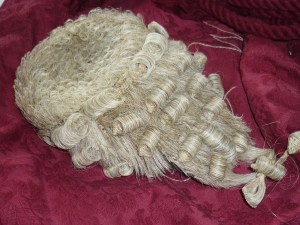
I walked along the path towards the Students’ Union, my mind whirled as I went through the alternative roads I might take. I crossed Western Bank, hardly noticing the traffic until a car hooted at me. Once on the far pavement I turned to cross the lawns towards the door to the Union. I was so distracted that I jumped when a voice said to me, ‘You look like you’re rather upset. Can I help?’
In front of me was the stocky figure of the Dean of the Law Faculty, Professor Wood. I knew him because, I had stood for and been elected to the Students’ Representative Council and the law Professor was the Staff Treasurer.
He smiled, encouraging me to tell him what was troubling me. I swallowed hard and then like a pipe bursting, the whole story came out; how unhappy I was, how I hated the long days in the labs; how awful the prospecting of failing and how upset my parents would be. ‘Come and see my on Monday afternoon and I’ll see what I can do. I think I can find you a place in the Law Faculty.’
Antiques Road Show
As the experts on the Antiques Road Show examine an item they always ask what the owner knows about the piece. I have a print I acquired some years ago whose provenance is a little risqué. It’s a lithograph by the artist John Ward and I bought it from the manageress of the club where I played squash. She was a dark haired, dark eyed woman who not only managed all the bookings at the club, but also ran the bar. It was a very social place and I often stayed on after a game to gossip with the staff and other players. It was also a favourite watering hole for police officers from the local CID.
The manageress produced the picture and asked me if I was interested in purchasing it for quite a modest sum. I recognised it as one of the Inns of Court and asked her how she had come by it. I was particularly concerned because the price she was asking was very low and I thought it might have been stolen. There were some shady characters drinking in the club. She reassured me that it was not stolen with the riposte that she wouldn’t have produced in front of a group of detectives who were drinking in the bar that night.. I could see the logic of her comment. ‘So’, I said, ‘How did you come by it?’
She told me that her then boyfriend was the manager of an ‘adult only’ club in Soho and some months before, there had been a police raid when the club was full. The clients had all made a hasty exit through the fire doors without stopping to collect any of the items they had left in the cloakroom. Over time most of the property had been collected, but the club had been left with a collection of umbrellas and this print. When the boyfriend was given the task of disposing of the picture he thought I might like it, as he knew I was a barrister.
I decided in the circumstances it was not the proceeds of a theft and I would not be charged with handling stolen property. so I purchased the print. 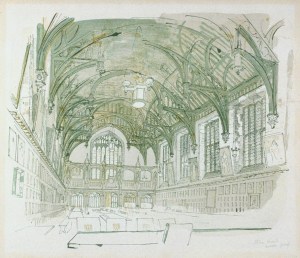
For many years it hung in my office in Chambers and now is in my home; it continues to give me great pleasure. It shows the hall of Grays Inn, the Inn of which I am a member, as incidentally is the protagonist in my novel Crucial Evidence. The lithograph also makes me smile as I think it was left in that Soho club by some eminent judge too embarrassed to reclaim his piece of art.
The Fatal Step
This is the working title of my new novel and so far I am about half way through the first draft. Some how the summer has not been conducive to writing – who wants to be stuck in front of a computer when the sun is shining outside. I think too, I am rather daunted by the task I have set myself. I didn’t think about it with Crucial Evidence. I’d started that as part of my dissertation for my MA and I just kept going until I’d finished. Then I drafted and redrafted without thinking, each time telling myself that this time it would work and when I sent it to agents someone would love. They didn’t and I began to realize that it wasn’t my writing that was the real problem but the type of book I wanted to write. Also talking to agents at places like Winchester Writers’ Conference and at The London Book Fair I knew any publisher would want a series of novels and I didn’t want to be tied to writing a book a year. In the end I decided to publish the book myself. In the process I’ve learnt at lot about writing and publishing, but that makes the mountain I have to climb much higher and harder than the first. I know how long it takes and how difficult it can be.
But you have to begin somewhere so this is the first page of my second novel. It follows the career of barrister Cassie Hardman as she gets her first leading brief in a murder case.
‘As Cassie hurried along the driveway from Snaresbrook Crown Court towards the tube station, she turned on her mobile phone. Amongst the emails from fashion houses, department stores and restaurants, there was a message showing the subject matter as Paul Sadler. He had been the defendant in a rape trial, who she had successfully defended at the Old Bailey the week before last. She didn’t recognise the name of the sender, Malcolm Delaney. Normally she was very careful about opening emails from unknown people but it was from someone who knew about her involvement in the Sadler case. She clicked the message open and read, ‘Miss Hardman, I wanted to congratulate you on your representation of Mr Sadler. Your cross examination was very effective and your closing remarks were obviously persuasive. Clearly they carried the jury along, as you know from the verdict. I would like the opportunity of congratulating you in person, and would like to invite you to have lunch or dinner with me. We can arrange a time and place later. I look forward to hearing from you. Malcolm’
The email gave no clue as to how Malcolm Delaney, knew she had represented Paul Sadler or what Delaney’s connection to the case was. Was he a police officer, a member of the court staff or just a spectator from the public gallery? She knew there were a number who came regularly to watch the proceedings at the Bailey; the staff described them as ‘groupies’ and she had been told by one of the ushers that some of them would ask which barristers were appearing in which court and make a point of watching their favourites’ cases. The wording of the message was a little old fashioned so perhaps it was one of them. The thought that one of the men from the gallery wanted to invite her to dinner amused her, but nothing more.
Back in Chambers, the senior clerk, Jack, summoned her into his room and closed the door behind her. On his desk were four lever arch files, tied with pink tape, the front sheet bore the title R v David Winston Montgomery. Jack beamed at her. ‘I’ve managed to get you a leading brief in a murder at the Bailey. I assume you’ll want to apply for silk in a couple of years. This is a good one; you’re ready for it, even though it’s a murder. None of the silks want this. Scared they’ll get tarred with a racist brush, I dare say. A woman won’t of course. Judge Crabtree is in a bit of a panic thinking the defendant might want to represent himself. I said, to Colin in the list office, my Miss Hardman can handle it. Spoke to Tim. Didn’t take long to persuade him you could do it. So there you are a leading brief in a murder.’
Any comments to make about that so important first page.
Fleet Street London 2
Researching Fleet Street for my novel I was reminded about the advice to look above shop window level to see what the buildings really looked like. I was doing just that when I noticed the number of different type of signs that shops displayed. The American interlopers MacDonalds and Starbucks had bland fascia boards on their shop fronts – so did Sainsburys so we can’t just blame trans-Atlantic invaders. Not surprisingly the pubs and wine bars had more distinctive signs.
So I wrote the following in my second Cassie Hardman novel,
‘She noticed the sign above the Punch public house, a gold painted profile of the character holding his truncheon aloft.
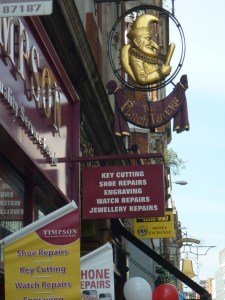
The Punch Tavern
Then she saw the three gold balls of a pawn brokers, next to a sign proclaiming they were pawnbrokers of distinction. She wondered how long there had been a need for them so close to the Temple and what the phrase ‘a pawnbrokers of distinction’ meant; did they only deal with people of distinction or only lend money against objects of distinction. Whichever it would rule her out.

Pawn Brokers of Distinction
In an optician’s window she was amused by a poster for spectacle frames by Lanvin; a hundred or so sketches of faces with little bits of colour, a green bow tie or purple earrings, but hardly any glasses.

Optiicans
They walked past what had once been the entrance to Sergeants Inn. Cassie glanced into the courtyard where there was a large green elephant. She pondered on what the animal was meant to represent or indeed why it was there at all.

Sergeants Inn
Soon they were under the oval sign of El Vino’s wine bar. The painted glass, in addition to the name, had the words Spain, Portugal, France, Germany Wines. What no Australian, New Zealand or Chilean, she thought. She remembered her pupil mistress telling her that at one time women were not allowed into the wine bar unless accompanied by a man and then they had to sit in the rear of the premises.
As they drew level with the faded sign of the three squirrels outside Gosling’s Bank, she heard James’s voice as if it was coming through water, asking her something about accounts. She shook her head as if to shake out fluid from her ear. ‘Sorry, I was miles away. You were saying?’
Gosling’s Bank
Old Bailey London
My novel Crucial Evidence is set in the London with which I was very familiar. Until a few years ago I was often working at the Central Criminal Court, more commonly known as the Bailey to the lawyers who work in there. The original Edwardian building houses the famous Number 1 Court and the hall with its painted ceiling. Next to that, opened in 1970 by the then Lord Mayor of London, is a newer building in which the courtroom 12, where much of my novel takes place, is situated. My journey to work was by Central Line Tube from Notting Hill Gate to St Paul’s. The map shows where the Old Bailey is on the edge of the City of London.

Map of area around the Central Criminal Court
I would walk along Newgate Street to the Old Bailey which is the name of the street which gives its name to the court. Quite often, when a terrorist trial was taking place the police would hold the traffic and pedestrians back at the junction with Warwick Lane to allow the prison van to sweep into the yard of the court. They would be dressed in bullet proof vests and carrying guns. I thought it was a bit stupid to hold up to twenty people where they would be in the line of fire if anyone tried to free the prisoners. The police may have prevented the escape but they risked a number of dead bystanders.

Junction of Newgate Street and Warwick Lane
I wanted to see if the area had changed since I had last been there and if, when I described the places my main character, barrister Cassie Hardman would see on her journeys around the area, they were the same as I remembered them. In the novel Cassie stands in the Bailey looking out onto a wet street scene. She describes the cobbles of Seacoal Lane glistening in the rain. If you look at the map, the lane has vanished into the middle of an office block. In another scene she looks sees the spire of St Brides Church – the journalist’s place of worship – now a new building under construction will hide it from view, if it has not already done so.

St Bride’s Spire

Artists Impression of a new office block on Old Bailey
I will have to do some editing when I come to the part in may next novel, whose working title is The Fatal Step where Cassie is looking out of the windows of the Bailey. At the moment as she gazes across the city the spire of St Brides in sparkling sunlight, but it will not be visible so instead she’ll have to look at the glass of the building opposite. But at least it was worth while going to London and walking around to see these changes for myself and, of course see how or when I can work them into my story. I’ll continue my walk along Fleet Street another time, but there have been changes there as well. Creating that sense of place in a novel really does rely on knowing the streets scenes you are writing and there is nothing like walking around with a camera and capturing it to take back to your desk.

 scribblingadvocate